Educational article
Progesterone levels: how to read your result by cycle timing

Educational content. It does not replace an individual medical assessment and should not be used for self-medication.

Why the number changes
Progesterone usually rises after ovulation and varies throughout the menstrual cycle and pregnancy. First check why the test was ordered. A value expected for one phase may have a different meaning at another point in the cycle.
Timing a test for ovulation
When the goal is to assess whether ovulation occurred, sampling is usually planned about one week before the expected next period. A fixed cycle day can be misleading if cycles are long, irregular or vary in length. Follow your own care team's instructions.
How to read the reference interval
Check the cycle phase, units and laboratory interval. A well-timed result may suggest recent ovulation, but a single measurement cannot reliably assess the entire luteal phase. This approach does not apply to tests ordered for pregnancy-related reasons.
Prepare for the discussion
Bring the sampling date, your last period, the full report and details of any hormone treatment. Discuss irregular cycles before repeating the test. Ask what the result can show and what would require another test or follow-up.
When to seek medical care
If symptoms persist, test results are abnormal, or you have questions about medication, arrange an individual assessment. Do not change treatment or doses without medical guidance.
Frequently asked questions
Is the test always done on day 21?
No. When assessing ovulation, timing relative to the next expected period matters.
Can I use one online reference range?
The reference depends on the phase, laboratory and reason for testing. Bring the complete report to your visit.
References
- Progesterone Test · MedlinePlus
- Fertility Evaluation of Infertile Women, 2026 · ASRM
Does this topic resonate with you?
Every case is different. Book a consultation to review your history, test results and goals with a personalized plan.
More articles about Female reproductive endocrinology
4 min de lectura
Publicado: 16 de noviembre de 2026 · Actualizado: 16 de noviembre de 2026
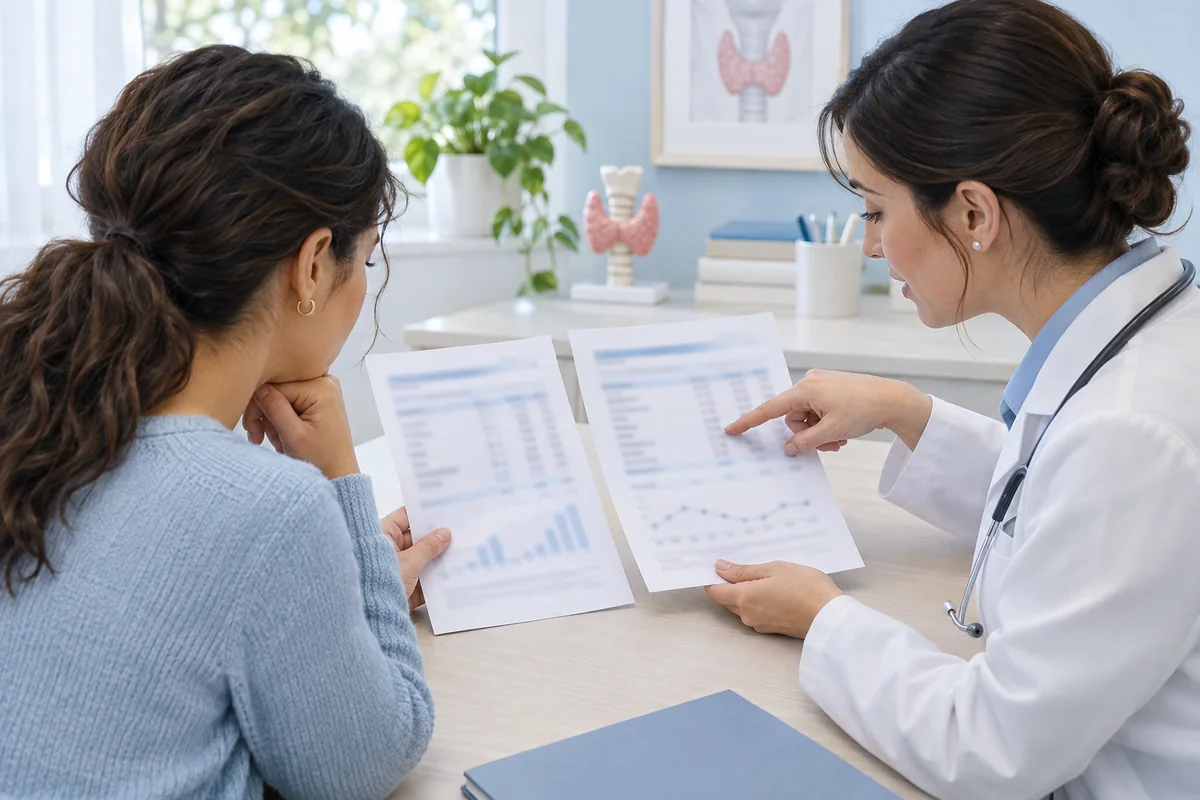
FSH and estradiol: understanding your hormone test results
What FSH and estradiol measure and why cycle timing, medication and the reason for the test matter when interpreting results.

3 min de lectura
Publicado: 16 de noviembre de 2026 · Actualizado: 16 de noviembre de 2026
Female hormones: what they do during the menstrual cycle
A guide to estradiol, progesterone, FSH and LH, how they work during the cycle and why tests are taken at different times.
3 min de lectura
Publicado: 16 de noviembre de 2026 · Actualizado: 16 de noviembre de 2026
Premenstrual symptoms: how to track the pattern
What to record to distinguish cyclical symptoms from symptoms that persist during the month.
3 min de lectura
Publicado: 16 de noviembre de 2026 · Actualizado: 16 de noviembre de 2026
What to eat during your menstrual cycle and follicular phase
Meal ideas for your cycle and how to adjust portions or review iron based on symptoms.

5 min de lectura
Publicado: 7 de noviembre de 2026 · Actualizado: 7 de noviembre de 2026
From the First Period to Adult Cycles: How Menstrual Patterns Change With Age
Learn how the menstrual cycle may vary during the first years after menarche, what information to track, and which changes may warrant a clinical evaluation.
5 min de lectura
Publicado: 5 de noviembre de 2026 · Actualizado: 5 de noviembre de 2026
Hormonal Treatments for Menstrual Cycle Disorders: Safe Decisions Before Starting or Changing Treatment
What to review before starting, restarting, or changing hormonal treatment for menstrual disorders, what to do about a missed dose, and when to seek guidance.