Educational article
PCOS symptoms: when to ask about polycystic ovary syndrome

Educational content. It does not replace an individual medical assessment and should not be used for self-medication.
Which changes may prompt an assessment
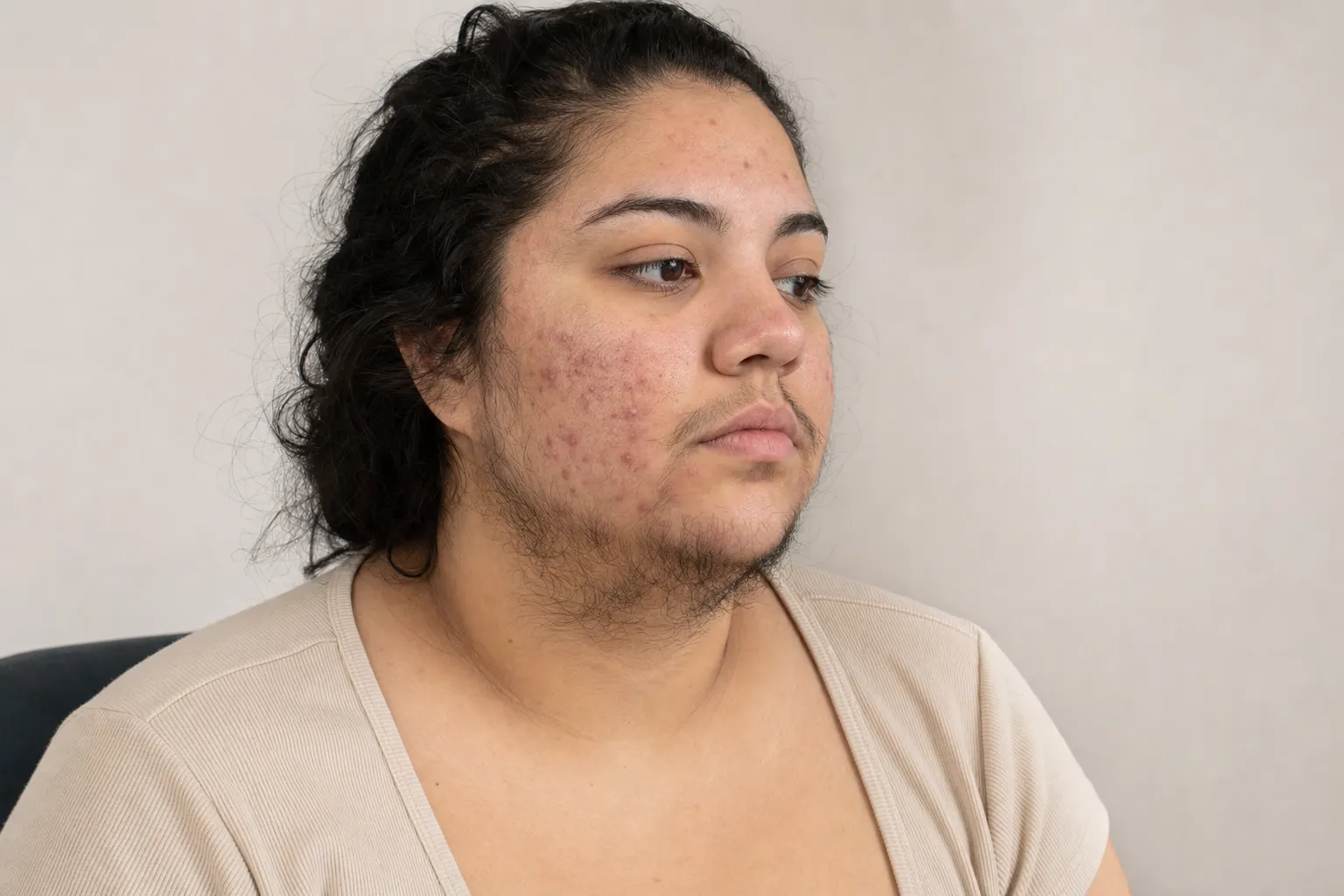
Polycystic ovary syndrome (PCOS) can involve irregular periods and androgen-related signs, such as increased hair growth on the chin. Acne and changes in scalp hair can also occur and have other causes. Record what changed, when it started and whether other symptoms appeared around the same time.
How PCOS is evaluated in adults
The assessment looks for a combination of findings such as ovulation problems and clinical or laboratory signs of excess androgens. In some settings, ultrasound appearance or other appropriate testing may help. The care team considers other causes before diagnosing PCOS.

Assessment is different for adolescents
Irregular periods around the first menstrual period can be part of development. Assessment considers the time since the first period and other findings. An ultrasound alone cannot diagnose PCOS in an adolescent.
What to bring to an appointment
If you can, track period dates, changes in hair or skin and treatments you use, including contraception. Bring previous reports. Ask what other explanations are being considered and which tests might clarify them.
When to seek medical care
If symptoms persist, test results are abnormal, or you have questions about medication, arrange an individual assessment. Do not change treatment or doses without medical guidance.
Frequently asked questions
Does an ultrasound with polycystic-looking ovaries confirm PCOS?
An ultrasound is only one finding. Context, symptoms and evaluation of other causes are part of diagnosis.
Do you have to have overweight to have PCOS?
No. Weight does not determine the diagnosis.
References
Does this topic resonate with you?
Every case is different. Book a consultation to review your history, test results and goals with a personalized plan.
More articles about Polycystic ovary syndrome (PCOS)

3 min de lectura
Publicado: 16 de noviembre de 2026 · Actualizado: 16 de noviembre de 2026
PCOS has a new name, PMOS: what it means for patients
Learn why PCOS was renamed polyendocrine metabolic ovarian syndrome and what the change means for an existing diagnosis.

3 min de lectura
Publicado: 16 de noviembre de 2026 · Actualizado: 16 de noviembre de 2026
Hyperandrogenism: what it means and how it is evaluated
Learn what may prompt an evaluation for androgen excess, which tests can help and why the pace of symptoms matters.

3 min de lectura
Publicado: 16 de noviembre de 2026 · Actualizado: 16 de noviembre de 2026
PCOS cycle tracking apps: what to log and how to choose
Learn how to keep a useful period record with PCOS, what predictions can miss and what to look for in an app’s privacy settings.
5 min de lectura
Publicado: 17 de agosto de 2026 · Actualizado: 11 de septiembre de 2026
Polycystic Ovary Syndrome: Warning Signs Indicating the Need for Medical Consultation
Discover the warning signs of polycystic ovary syndrome, such as acne and hirsutism, that indicate the need for timely medical consultation.

4 min de lectura
Publicado: 16 de noviembre de 2026 · Actualizado: 16 de noviembre de 2026
FSH and estradiol: understanding your hormone test results
What FSH and estradiol measure and why cycle timing, medication and the reason for the test matter when interpreting results.

3 min de lectura
Publicado: 16 de noviembre de 2026 · Actualizado: 16 de noviembre de 2026
PCOS and high blood sugar: which tests to discuss
What glucose testing adds to PCOS care and when to review results.