Educational article
More Autonomy Around Food in Adolescence: Family Agreements Without Rigid Rules

Educational content. It does not replace an individual medical assessment and should not be used for self-medication.
What it means to gain autonomy around food
During adolescence, it is common to want more say over schedules, preferences, and meals: preparing something simple, eating with friends, or choosing options away from home. This autonomy is part of everyday life and, on its own, does not indicate that there is a problem. Families can offer availability and guidance without turning every choice into an evaluation of the adolescent’s body or weight.
Everyday changes and their context
An adolescent may suggest a different mealtime, prefer certain foods, prepare something independently, or turn down a particular option. A single situation is not enough to diagnose an eating difficulty or justify special monitoring. It is more helpful to consider the context and keep communication open, without automatically interpreting every preference as a challenge.
Practical agreements, not rules about the body
Agreements can help organize family life: letting the family know if they will miss a shared meal, deciding which simple options will be available, or coordinating schedules around activities. By contrast, monitoring weight, imposing portion sizes, or banning food groups is not necessary to support autonomy and may create tension. It is preferable to talk about the household’s specific needs, not about how the adolescent should look.
Neutral conversations that make room for discussion
Simple questions can help you learn about preferences without applying pressure: “What would you like to have available when you get home late?” or “How should we coordinate dinner if you’re eating with your friends?” Listening, negotiating what is possible, and calmly explaining time or budget limitations can help keep the conversation practical and respectful.
Taking part in shopping and food preparation
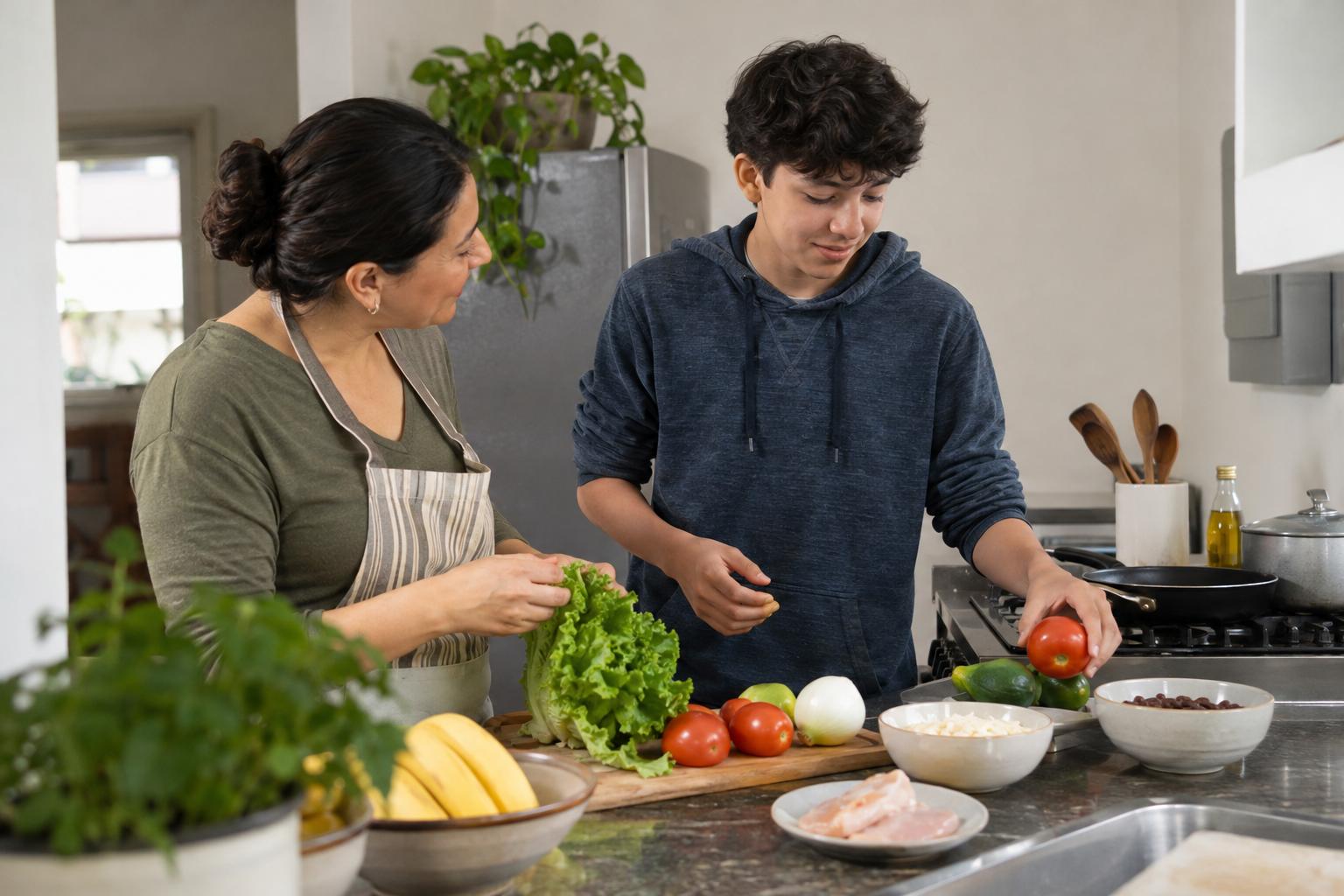
Depending on their age and skills, an adolescent can help choose foods, check what is needed, or prepare simple options. An adult can teach them how to use utensils and appliances safely and agree on which tasks require supervision. Participation does not need to be a nutrition test or an obligation; it can be a concrete way to learn and contribute to the family routine.
Eating away from home is also part of growing up
Sharing meals with friends or arranging a meal during a day of studying or activities is part of social life. It is not always necessary to know every detail of what they ate. Age-appropriate agreements may be enough, such as letting the family know if plans change or they will miss a shared meal. The goal is to coordinate and maintain trust, not to supervise every choice.
Supporting growth without monitoring
Health visits provide an opportunity to review growth and discuss puberty and habits based on each adolescent’s situation. At home, it is preferable to pay attention to sustained changes in well-being, mood, or the relationship with food rather than weighing the adolescent or controlling their portions. If you have concerns, a health professional can guide appropriate follow-up.
When to seek guidance
Avoid using comments about weight to persuade, imposing extreme restrictions, or arguing about every meal. If eating difficulties persist, there is significant distress, or the situation affects daily life, it may be helpful to consult a health professional. The evaluation should take the context and the adolescent’s individual needs into account; this article is not a substitute for a consultation.
When to seek medical care
If symptoms persist, test results are abnormal, or you have questions about medication, arrange an individual assessment. Do not change treatment or doses without medical guidance.
Frequently asked questions
Is it concerning if my adolescent wants to choose what to eat?
Not necessarily. Having more say over schedules and preferences can be part of developing autonomy. A single choice is not enough to conclude that there is a problem; the context and overall well-being matter.
How can I talk about eating away from home without being controlling?
Agree on practical details, such as letting the family know if plans change or the adolescent will miss a family meal. Asking what they need to stay organized is usually more helpful than asking for details about every food.
When is it a good idea to seek guidance?
If eating difficulties persist, there is significant distress, or the situation affects daily life, consult a health professional. Guidance can take the adolescent’s growth, puberty, and individual circumstances into account.
Does this topic resonate with you?
Every case is different. Book a consultation to review your history, test results and goals with a personalized plan.
More articles about Growth and puberty

6 min de lectura
Publicado: 10 de noviembre de 2026 · Actualizado: 10 de noviembre de 2026
Puberty Earlier or Later Than Expected: How Clinicians Decide What to Evaluate
The sequence and pace of pubertal changes, together with growth patterns and medical history, help determine whether observation or further evaluation is needed.

5 min de lectura
Publicado: 5 de octubre de 2026 · Actualizado: 5 de octubre de 2026
Weight Changes and Puberty: How to Avoid Confusing One for the Other
Weight and appearance alone cannot confirm the onset of puberty. Learn which changes to look for, how to describe their progression, and when to seek professional guidance.

6 min de lectura
Publicado: 2 de octubre de 2026 · Actualizado: 2 de octubre de 2026
Height Doesn’t Tell the Whole Story: What Bone Maturity Assessment Can Add
Bone age, usually estimated from an X-ray of the hand and wrist, complements the evaluation of a child’s growth. Learn how it is interpreted alongside previous measurements, family history, and the child’s development.

6 min de lectura
Publicado: 24 de septiembre de 2026 · Actualizado: 24 de septiembre de 2026
Height, Bone Age, and Pubertal Timing: How an Individualized Plan Takes Shape
Current height alone is not enough to decide whether intervention may be appropriate. Learn how growth patterns, bone age, puberty, and medical history are assessed to discuss options and realistic goals.

5 min de lectura
Publicado: 12 de septiembre de 2026 · Actualizado: 12 de septiembre de 2026
From Birth to Previous Treatments: Personal Details That Can Help Assess Growth
What information about birth, health, and previous treatments can provide context when assessing the growth and puberty of children and adolescents.

6 min de lectura
Publicado: 25 de agosto de 2026 · Actualizado: 25 de agosto de 2026
How to Talk at an Appointment About Growth and Puberty When Something Concerns You
How to prepare for a conversation about growth, pubertal changes, and privacy during an appointment, without assuming a diagnosis or treatment.