Educational article
How to Evaluate Whether a Growth Plan Is Working

Educational content. It does not replace an individual medical assessment and should not be used for self-medication.
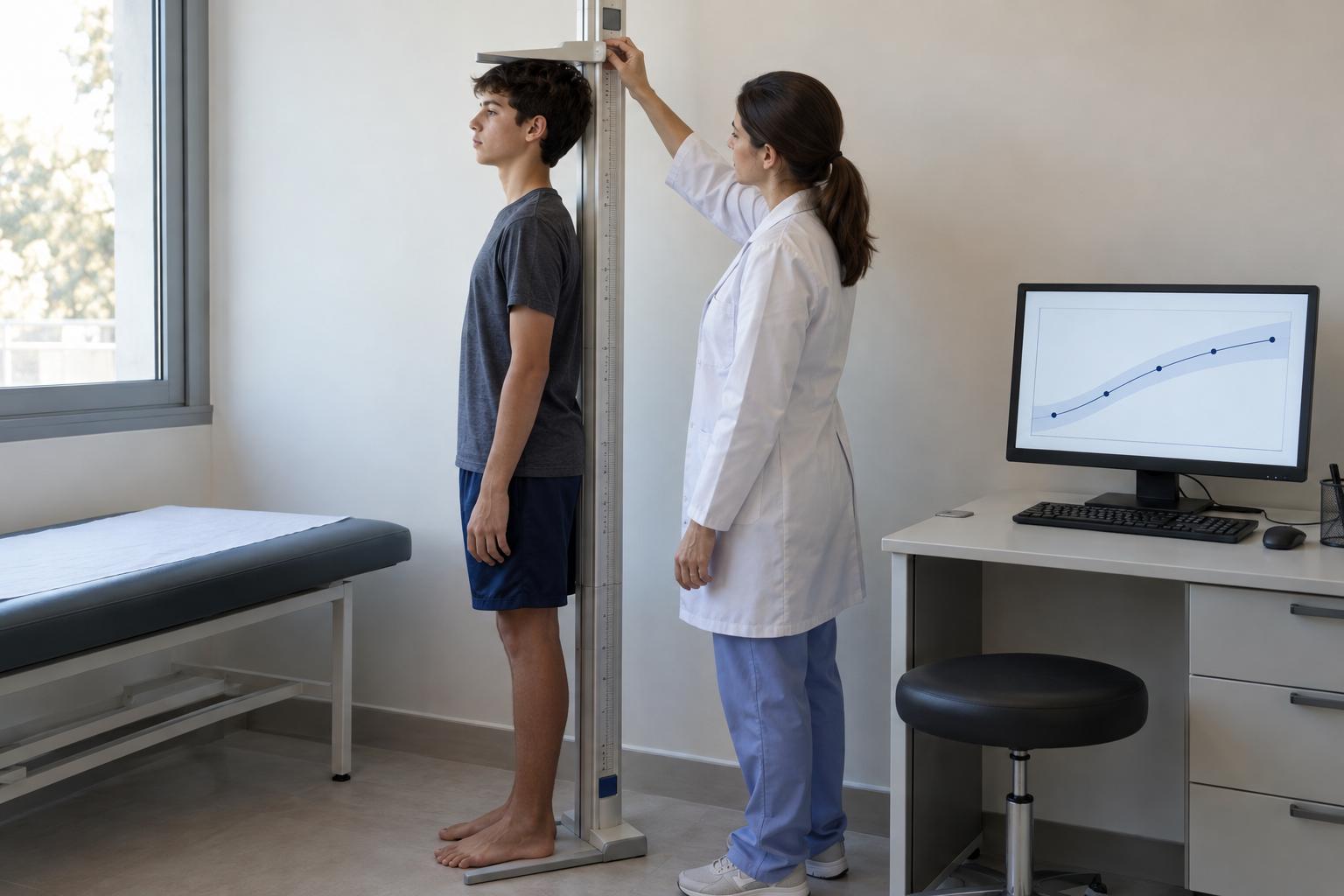
The Trajectory Matters More Than a Single Measurement
A single measurement cannot show whether progress is as expected. The care team compares the current height with previous records, taking into account measurement quality and the time that has elapsed. This comparison helps estimate growth velocity and interpret the trajectory on an appropriate growth chart.
What Is Reviewed When Interpreting Height
During a follow-up visit, the care team may review: - Whether the measurement was taken using proper technique and whether it should be repeated. - The appropriate reference chart for the child’s age and clinical context. - The child’s position on the chart and how it has changed compared with previous records. - Health and growth history, including relevant family information. The interpretation considers all of the available information. A height measurement or an isolated data point does not, by itself, confirm whether growth is appropriate.
How Growth Velocity Is Estimated
Growth velocity is estimated by comparing how much height changed over a period of time. If measurements are taken too close together, small differences in technique can make them difficult to interpret. The useful interval depends on the individual situation; the clinician considers the time elapsed, the appropriate chart, and the reason for follow-up.
What the Care Team May Review If There Are Concerns
If the trajectory is not as expected or concerns arise, the care team may review the diagnosis, how the management plan is being carried out, adherence, and the prescribed dose, as well as other health factors that may affect growth. The review is tailored to each case and does not mean that every difference requires a treatment change.
What a Follow-Up Visit May Include
Depending on the situation, a follow-up visit may include a discussion of health since the last appointment, height and weight measurements, comparison with previous records, an assessment of development, and a review of requested tests. It is also an opportunity to clarify what the team expects to observe, when it would be useful to measure again, and what information may be helpful to record at home.
Helpful Questions to Ask at a Follow-Up Visit
You may want to ask: - What does my growth trajectory show when compared with previous measurements? - Is there enough time between measurements to estimate growth velocity? - Which aspects of the diagnosis or plan are being monitored? - What changes or concerns should I report before the next follow-up visit? - When and where should the next measurement be taken?
When to Contact the Treating Team
Contact the care team if you have concerns about progress, experience an effect that worries you, or have difficulty following the agreed plan. If you have a measurement that raises questions, explain when and how it was taken and share any available records. In an emergency, seek care through the usual channels. Do not change or stop medications on your own.
Agreeing on the Next Steps
Before the follow-up visit ends, confirm the current plan, which data will be compared, and when the next review is recommended. The care team can explain how to contact them if a concern arises. Continuing or reevaluating the management plan is decided based on the growth trajectory and clinical situation, not a single measurement.
When to seek medical care
If symptoms persist, test results are abnormal, or you have questions about medication, arrange an individual assessment. Do not change treatment or doses without medical guidance.
Frequently asked questions
Does one low measurement mean the plan is not working?
Not necessarily. Technique can affect a measurement, and a single figure cannot be used to estimate growth velocity. The care team interprets it alongside reliable records taken at different times and other clinical information.
Why can’t growth velocity be assessed using measurements taken very close together?
An interval is needed to compare changes in height with sufficient context. The appropriate amount of time depends on the individual situation and is determined by the treating team.
Should I adjust the medication if I don’t notice changes in height?
Do not adjust or stop treatment without medical assessment. Discuss your concern with the care team, which can review the measurements, trajectory, diagnosis, adherence, prescribed dose, and other factors before making a decision.
Does this topic resonate with you?
Every case is different. Book a consultation to review your history, test results and goals with a personalized plan.
More articles about Growth and puberty

6 min de lectura
Publicado: 10 de noviembre de 2026 · Actualizado: 10 de noviembre de 2026
Puberty Earlier or Later Than Expected: How Clinicians Decide What to Evaluate
The sequence and pace of pubertal changes, together with growth patterns and medical history, help determine whether observation or further evaluation is needed.

5 min de lectura
Publicado: 5 de octubre de 2026 · Actualizado: 5 de octubre de 2026
Weight Changes and Puberty: How to Avoid Confusing One for the Other
Weight and appearance alone cannot confirm the onset of puberty. Learn which changes to look for, how to describe their progression, and when to seek professional guidance.

6 min de lectura
Publicado: 2 de octubre de 2026 · Actualizado: 2 de octubre de 2026
Height Doesn’t Tell the Whole Story: What Bone Maturity Assessment Can Add
Bone age, usually estimated from an X-ray of the hand and wrist, complements the evaluation of a child’s growth. Learn how it is interpreted alongside previous measurements, family history, and the child’s development.

6 min de lectura
Publicado: 24 de septiembre de 2026 · Actualizado: 24 de septiembre de 2026
Height, Bone Age, and Pubertal Timing: How an Individualized Plan Takes Shape
Current height alone is not enough to decide whether intervention may be appropriate. Learn how growth patterns, bone age, puberty, and medical history are assessed to discuss options and realistic goals.

5 min de lectura
Publicado: 12 de septiembre de 2026 · Actualizado: 12 de septiembre de 2026
From Birth to Previous Treatments: Personal Details That Can Help Assess Growth
What information about birth, health, and previous treatments can provide context when assessing the growth and puberty of children and adolescents.

6 min de lectura
Publicado: 25 de agosto de 2026 · Actualizado: 25 de agosto de 2026
How to Talk at an Appointment About Growth and Puberty When Something Concerns You
How to prepare for a conversation about growth, pubertal changes, and privacy during an appointment, without assuming a diagnosis or treatment.