Educational article
High Blood Pressure During Pregnancy: How to Recognize Risks and Maintain Follow-Up

Educational content. It does not replace an individual medical assessment and should not be used for self-medication.
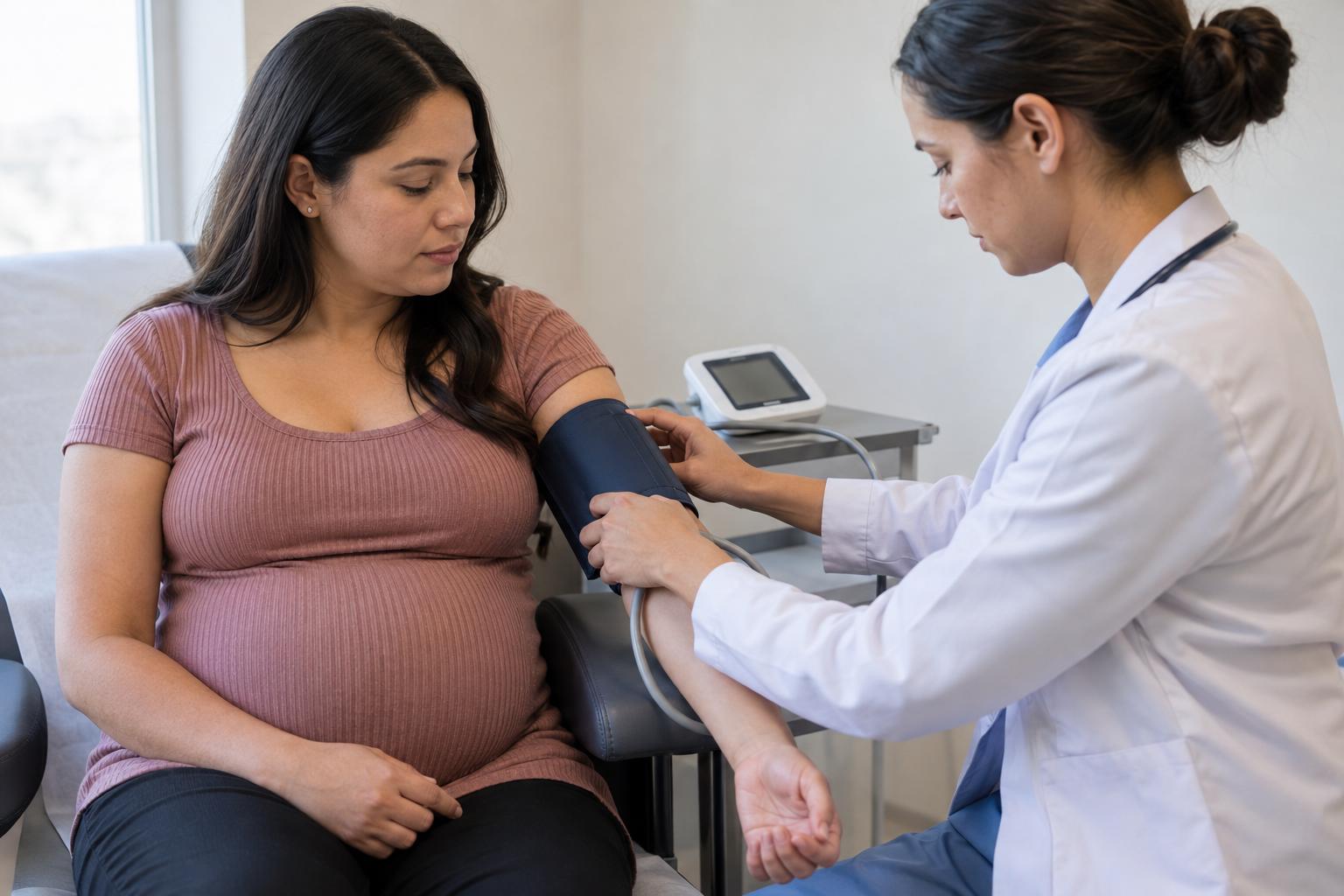
What it means to have high blood pressure during pregnancy
An elevated reading needs to be assessed by your healthcare team, but a single reading does not confirm preeclampsia or establish the cause. Interpretation takes into account, among other things, the week of pregnancy, your medical history, and other measurements or clinical findings. Chronic hypertension was present before pregnancy or is identified early in pregnancy. Gestational hypertension develops during pregnancy in someone with no previously known hypertension. Preeclampsia is a distinct disorder diagnosed using clinical criteria and, when appropriate, additional evaluations. Not all high blood pressure is preeclampsia.
Who may need closer monitoring
A history of hypertension, elevated readings, or other health conditions may lead your healthcare team to recommend additional checkups. Your obstetric history and how the pregnancy is progressing are also considered. Risk factors help guide evaluation, but they do not, by themselves, predict that a complication will occur. High blood pressure during pregnancy can arise in different contexts and should not automatically be attributed to an endocrine disease.
Warning signs that require urgent attention
Seek urgent care if you have a severe, persistent headache, changes in your vision, pain in the upper abdomen, or difficulty breathing during pregnancy. Do not wait for your next prenatal appointment to ask for help, especially if your symptoms are severe or you feel very unwell. These symptoms do not, by themselves, confirm a diagnosis, but they may require immediate evaluation. Contact the emergency services available to you, following local instructions.
How high blood pressure is evaluated
Your healthcare team makes the diagnosis. Evaluation may include blood pressure measurements and, depending on your medical history and findings, blood or urine tests and checks on fetal well-being and growth. Comparing a single reading with numbers found online does not allow you to diagnose yourself. Tell your healthcare team about your medical history, any readings you have recorded, and any new symptoms.
What follow-up your healthcare team may recommend
The frequency and type of follow-up depend on each individual case. At prenatal appointments, your healthcare team monitors your blood pressure and reviews your health and the fetus's health; they may recommend additional checks or coordinate your care with other professionals. If you are advised to measure your blood pressure at home, ask how and when to do it, what information to record, and whom to contact with the results. Keep a log as instructed so your healthcare team can interpret it along with your medical history.
Medications: do not make changes on your own
Do not start, stop, or adjust medications without professional guidance. Some blood pressure treatments need to be reviewed when planning a pregnancy or after confirming one; the decision depends on your clinical situation and stage of pregnancy. If you take blood pressure medication and are planning a pregnancy or have just confirmed one, contact the person who prescribed it or your prenatal care team to review your plan. Do not stop taking it on your own while waiting for guidance.
Common mistakes to avoid
A single reading is not enough to establish a diagnosis, and the absence of symptoms does not replace prenatal checkups. It is also not safe to change your treatment or rely on lifestyle habits alone to eliminate the risk. Attend your checkups and share elevated readings or changes in your health as instructed by your healthcare team. If you experience the warning signs described above, seek urgent care.
Evaluation is individualized
Follow-up is tailored to your medical history, measurements, and how your pregnancy is progressing. This information is general and does not replace evaluation or guidance from your healthcare team.
When to seek medical care
If symptoms persist, test results are abnormal, or you have questions about medication, arrange an individual assessment. Do not change treatment or doses without medical guidance.
Frequently asked questions
Does all high blood pressure during pregnancy mean preeclampsia?
No. It may be related to pre-existing hypertension, gestational hypertension, or other circumstances. Your healthcare team determines the diagnosis based on measurements and, when appropriate, additional evaluations.
Should I measure my blood pressure at home?
Do so if your healthcare team recommends it. Ask for instructions on the technique, frequency, what information to record, and how to share the results; do not use a single reading to diagnose yourself.
What should I do if I take blood pressure medication and am pregnant?
Contact the person who prescribed the medication or your prenatal care team as soon as possible to review it. Do not start, stop, or adjust medications on your own.
Does this topic resonate with you?
Every case is different. Book a consultation to review your history, test results and goals with a personalized plan.
More articles about Pregnancy and endocrinology
5 min de lectura
Publicado: 3 de noviembre de 2026 · Actualizado: 3 de noviembre de 2026
Pregnancy Discomforts and Signs to Discuss: Avoid Jumping to Conclusions
A change during pregnancy does not reveal its cause on its own. Learn what to observe, when to discuss it with your prenatal care team, and why severe or sudden symptoms require following emergency instructions.

5 min de lectura
Publicado: 27 de octubre de 2026 · Actualizado: 27 de octubre de 2026
Before Pregnancy or at Your First Appointment: How to Organize Your Endocrine History
How to gather previous diagnoses, treatments, surgeries, and test results to review your endocrine history when planning a pregnancy or during pregnancy.

5 min de lectura
Publicado: 26 de octubre de 2026 · Actualizado: 26 de octubre de 2026
Pregnancy and Insulin Treatment: Habits to Reduce Blood Glucose Lows
A practical guide for pregnant people who use insulin: how to coordinate meals and activity with your prescribed plan, carry the recommended source of glucose, and know when to seek help.

5 min de lectura
Publicado: 16 de octubre de 2026 · Actualizado: 16 de octubre de 2026
If You Get Sick During Pregnancy and Have an Endocrine Condition: Whom to Notify and What Information to Share
What information to share and how to seek guidance if you have an endocrine condition and develop a fever, vomiting, or another illness during pregnancy. Includes prudent guidance about medications and follow-up.

5 min de lectura
Publicado: 1 de octubre de 2026 · Actualizado: 1 de octubre de 2026
Hormonal Symptoms Before or During Pregnancy: How a Timeline Can Help
Learn how to record when symptoms began, how long they last, and how they have changed so you can share that information during prenatal care, without assuming their cause in advance.
5 min de lectura
Publicado: 1 de septiembre de 2026 · Actualizado: 1 de septiembre de 2026
Hyperthyroidism and Pregnancy: Balancing Maternal Control and Fetal Safety
Learn how hyperthyroidism treatment is reviewed during pregnancy based on gestational stage, symptoms, and thyroid function tests.