Educational article
Adrenal Insufficiency: Prepare an Emergency Plan for Sick Days

Educational content. It does not replace an individual medical assessment and should not be used for self-medication.
Agree in writing on what to do before you get sick
If you have been diagnosed with adrenal insufficiency, ask your treating team for a written plan for sick days and other significant physical stressors. It should explain what to do in your specific situation, when to contact the team, and when to go to the emergency department. Needs vary from person to person, and there is no universally safe set of instructions. Follow your personalized instructions and consult your team before changing your medication.
Confirm which situations the plan covers
Review the plan with your endocrinologist or the professional managing your treatment. Ask what to do if you have a fever, an infection, or another illness, and what instructions apply to procedures and surgery. Also confirm what to do if you vomit or cannot keep oral medication down, and which signs mean you should seek urgent care.
Vomiting or being unable to take medication
Persistent vomiting or being unable to keep oral medication down may prevent treatment from being absorbed as expected. Follow the specific plan you received and seek urgent care when the plan directs you to do so or if you are concerned about your condition. If you have a rescue plan, use it only as instructed and after receiving the necessary training; do not improvise or delay care you need.
Rescue medication: instructions and training
Ask your treating team whether you should have rescue medication, how to store and check it, who could help you, and what to do after using it. If an injectable form is prescribed, request hands-on training for yourself and for the caregiver who may assist you. Preparation and use must follow only the personalized instructions you received.
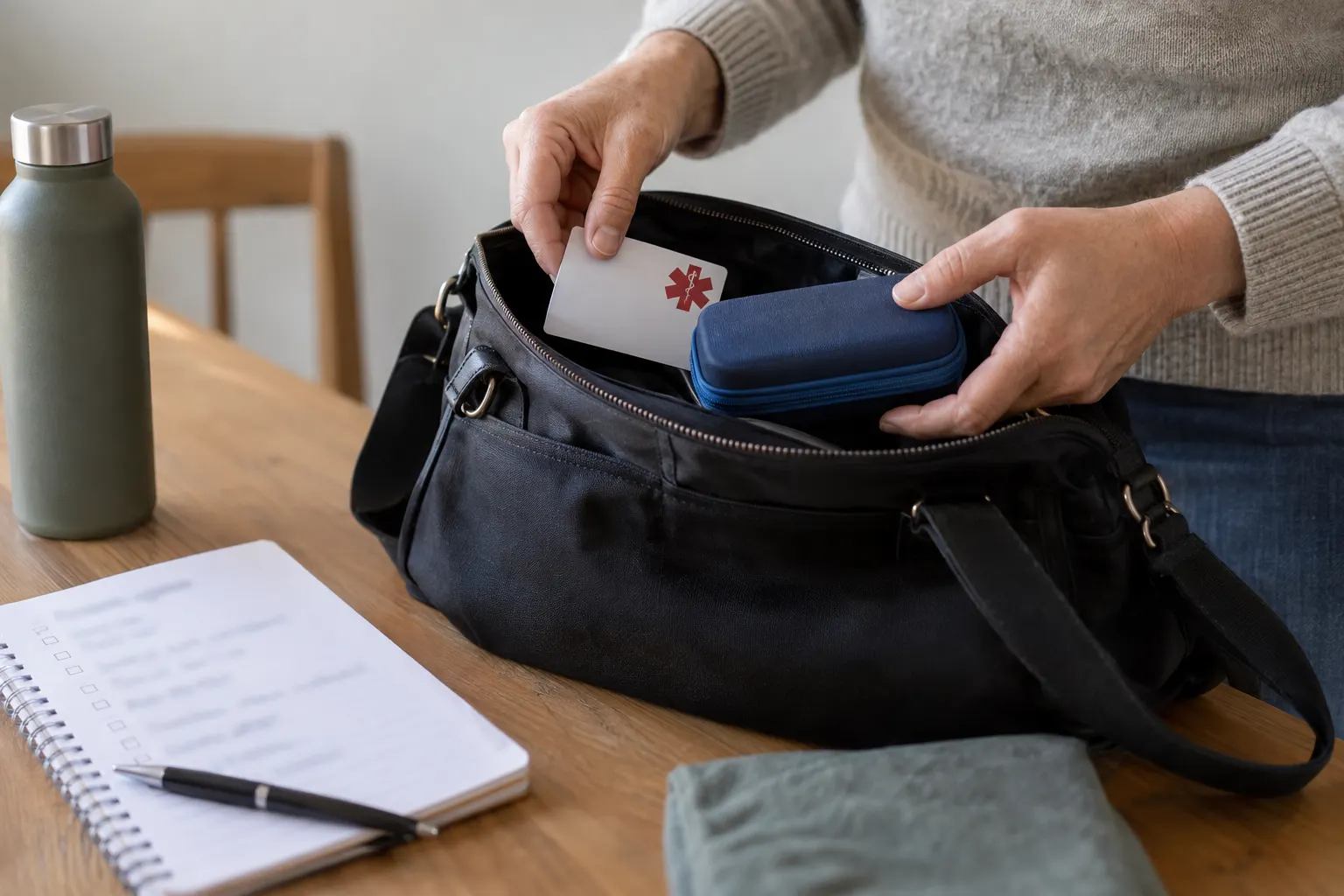
Carry essential information with you
Keep a medical ID with you stating that you have adrenal insufficiency. Keep an up-to-date medication list, your treating team's contact information, and a copy of your written plan readily accessible. Share this information with someone you trust. Before traveling, make sure you will have access to your medications and know where to seek care.
Coordinate your plan before surgery
Tell the team performing the procedure and the anesthesia team about your diagnosis in advance. Ask them to coordinate with you and the professional managing your adrenal insufficiency on instructions for that day, including what to do if you cannot take medication by mouth. Bring your medical ID, medication list, and written plan.
Plan ahead for access to emergency care while traveling
Before traveling or having a procedure away from your usual care location, find out how to access emergency care and explain that you have adrenal insufficiency. If you will be outside Bogotá, for example, identify whom you will contact in advance and keep your medical information with you. When seeking care, tell the team about your diagnosis and share your plan.
Review the plan at your follow-up visits
Ask your team to review the instructions at your follow-up visits, especially if your treatment or care needs change. Confirm that the plan is still current and that you and your caregiver understand what to do if you become ill, vomit, or have surgery. Preparing ahead can help avoid having to make decisions on the spot in an emergency.
When to seek medical care
If symptoms persist, test results are abnormal, or you have questions about medication, arrange an individual assessment. Do not change treatment or doses without medical guidance.
Frequently asked questions
Can I follow a stress-dose schedule I found online?
Do not use it as a substitute for personalized instructions. Ask your treating team for a written plan that takes your diagnosis, treatment, and concerns into account.
What should I do if I vomit and cannot keep my medication down?
Follow the specific plan your team gave you and seek urgent care when the plan directs you to, if vomiting persists, or if you are concerned about your condition. Use rescue medication only if it was prescribed and you received training.
What information should I bring to surgery or the emergency department?
Bring a medical ID, an up-to-date medication list, your treating team's contact information, and a copy of your written plan. Before surgery or a procedure, tell the medical and anesthesia teams about your diagnosis.
Does this topic resonate with you?
Every case is different. Book a consultation to review your history, test results and goals with a personalized plan.
More articles about Adrenal glands

6 min de lectura
Publicado: 15 de octubre de 2026 · Actualizado: 15 de octubre de 2026
Fatigue in Older Adults: When to Consider the Adrenal Glands—and When Not To
Fatigue and dizziness in older adults can have many causes. Age does not mean the adrenal glands are failing: learn when a healthcare professional may consider evaluating cortisol.