Educational article
Diabetes and Acute Illness: What to Share at Your Appointment When Your Symptoms Change

Educational content. It does not replace an individual medical assessment and should not be used for self-medication.
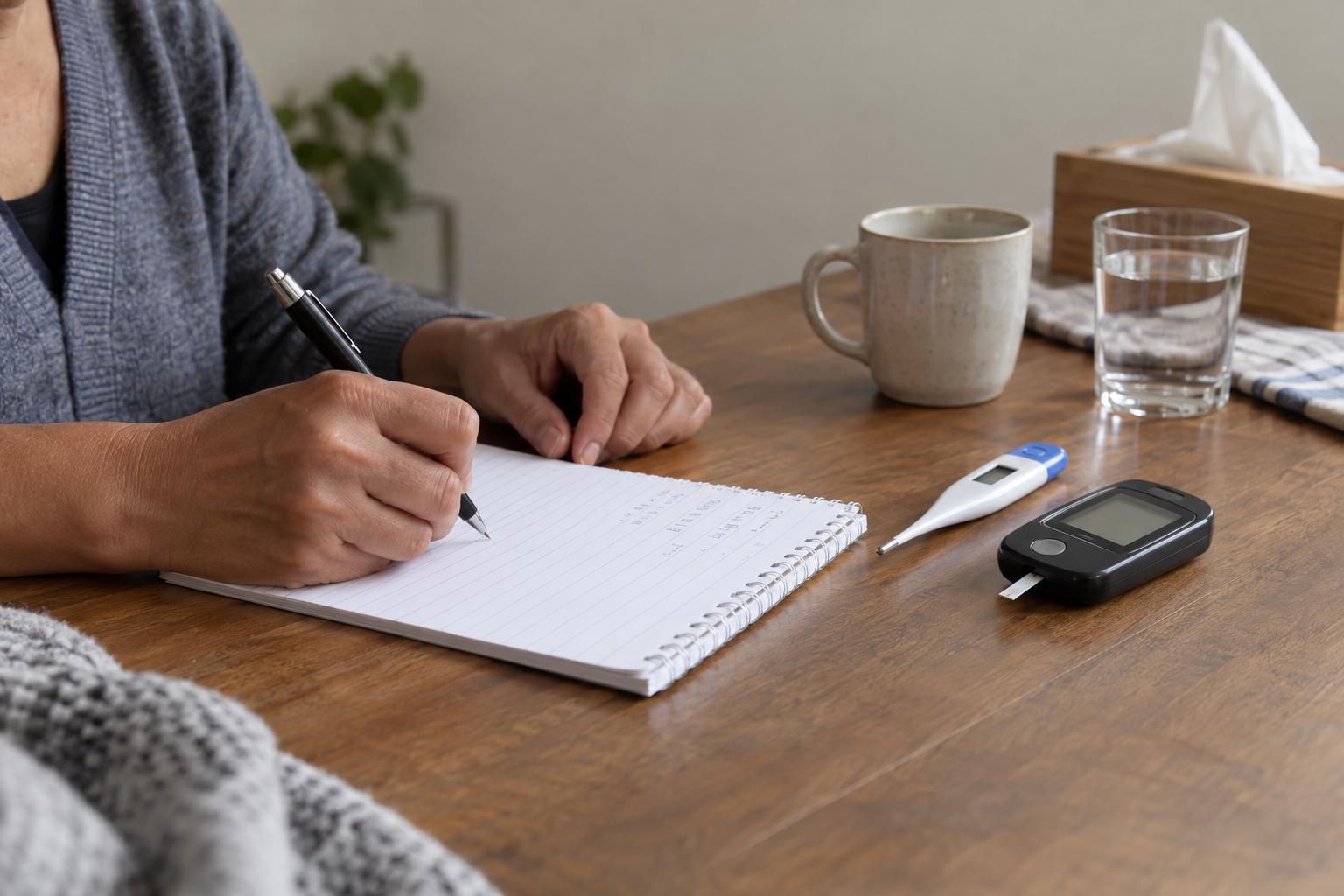
Why is it helpful to organize this information?
A fever, infection, vomiting, or diarrhea can change how much you eat and drink, how you feel, and your glucose readings. Keeping track of what is happening and how it changes over time helps your healthcare team advise you with more context. If warning signs appear, do not wait for a scheduled appointment.
Don’t record only your glucose
Note when your symptoms began and whether they have changed. Include your temperature if you measured it, how many times you have vomited or had diarrhea, whether you can keep fluids down, and how much you have been able to eat. Also tell your healthcare team if you feel significantly worse or are having difficulty carrying out your usual activities.
Which readings and results should you share?
Have your glucose readings available, including the time and when they were taken, if you know. If your healthcare team has told you to test for ketones, share the result, when you obtained it, and the testing method. Not everyone needs to test for ketones; ask whether it applies to your situation.
Clarify what to do about your medications
Managing medications during an illness depends on the individual and their treatment. Keep an up-to-date list of your medications and report if you missed a dose or a healthcare professional advised a change. Ask what to do with each medication while your symptoms last; do not stop or change doses on your own.
Helpful questions for your healthcare team
You can ask: “What should I do with each medication while I have these symptoms?”, “How often should I check my glucose according to my plan?”, “Should I test for ketones in my situation?”, and “Who should I contact if I can’t stay hydrated or I’m concerned about my readings?” If you have a sick-day plan, confirm that you know how to follow it.
A simple record to bring or share
Put the following in a note: when your symptoms began and how they have changed, your temperature if you measured it, any vomiting or diarrhea, the fluids and food you have been able to consume, your glucose readings, and ketone results if applicable. Add your usual medications, any doses you missed, and any changes advised by a healthcare professional.
When should you seek urgent care?
Seek urgent care if you have difficulty breathing, confusion, persistent vomiting, cannot keep fluids down, or notice significant deterioration. Do not wait for a routine appointment in these situations. If you already have personalized emergency instructions for your situation, follow them.
This guide does not replace an individual medical evaluation
Sharing clear information helps your healthcare team understand what has changed and advise you about next steps. This information is educational and does not replace a medical evaluation. If you have warning signs, seek urgent care rather than waiting for a follow-up appointment.
When to seek medical care
If symptoms persist, test results are abnormal, or you have questions about medication, arrange an individual assessment. Do not change treatment or doses without medical guidance.
Frequently asked questions
Should I test for ketones every time I have a fever or infection?
Not necessarily. It depends on your situation, treatment, and clinical instructions. Ask your healthcare team whether you should test for ketones and how to share the result.
What should I do if I can’t keep fluids down or I keep vomiting?
Contact a healthcare service for guidance. If the vomiting is persistent or you cannot keep fluids down, seek urgent care instead of waiting for a routine appointment.
Can I stop taking my medications while I’m sick?
Do not stop or change medications on your own. Ask what to do with each one, and report if you missed doses or received instructions from a healthcare professional.
Does this topic resonate with you?
Every case is different. Book a consultation to review your history, test results and goals with a personalized plan.
More articles about Diabetes

6 min de lectura
Publicado: 11 de noviembre de 2026 · Actualizado: 11 de noviembre de 2026
Diabetes and Heart and Kidney Health: What May Influence Medication Choices
When choosing diabetes medications, clinicians may consider blood glucose control, cardiovascular history, kidney function, possible side effects, and each person’s preferences.

6 min de lectura
Publicado: 4 de noviembre de 2026 · Actualizado: 4 de noviembre de 2026
Borderline Glucose or HbA1c: When Is Diabetes Confirmation Needed?
What fasting glucose, HbA1c, and oral glucose tolerance thresholds mean, when an abnormal result is usually confirmed, and which factors may affect interpretation.

5 min de lectura
Publicado: 27 de octubre de 2026 · Actualizado: 27 de octubre de 2026
Going Home After Giving Birth with Diabetes: Connecting Your Hospital Plan with Follow-Up Care
What to confirm before discharge if you have type 1 or type 2 diabetes: who will continue your care, which documents to keep, and how to prepare for your first follow-up visit.
6 min de lectura
Publicado: 4 de octubre de 2026 · Actualizado: 4 de octubre de 2026
Everyday Strategies to Minimize Complications in Diabetes
Discover practical and effective strategies to prevent complications in diabetes and improve your quality of life in Bogotá.

5 min de lectura
Publicado: 29 de septiembre de 2026 · Actualizado: 29 de septiembre de 2026
Type 2 Diabetes Prevention: Which Risk Factors Can and Can’t Change
Learn which type 2 diabetes risk factors can be addressed and which cannot be changed. It may be possible to reduce risk, but this does not guarantee that the disease can be prevented.
5 min de lectura
Publicado: 17 de septiembre de 2026 · Actualizado: 17 de septiembre de 2026
Preparing for Your Diabetes Medical Checkups: Practical and Effective Tips
Learn how to prepare for your diabetes medical checkups with practical and effective tips that will help you improve your health.