Educational article
Gender-Related Distress in Adults: How to Recognize an Emotional Crisis and Seek Safe Support

Educational content. It does not replace an individual medical assessment and should not be used for self-medication.

Being transgender is not an illness
Being transgender is not an illness or something that needs to be corrected. Some people experience distress related to a mismatch between the gender they were assigned at birth and their identity; others do not, or experience it in different ways. Distress can change depending on the circumstances, environment, and access to respectful support. By itself, it does not indicate a mental health crisis.
Intense distress and an emergency are not the same thing
It may be helpful to seek professional support soon if distress increases, affects daily life, or becomes difficult to manage, even if the person can remain safe. Seek urgent help if there is immediate danger or the person cannot protect themself. These are general guidelines, not a diagnostic test or a measure of how much someone must suffer to deserve care.
Warning signs that call for urgent help
Take thoughts of self-harm or suicide seriously, as well as feeling unable to stay safe, severe disorganization, or a decline that makes it impossible to meet basic needs. These signs do not occur in all transgender people or in everyone who experiences gender-related distress. If there is immediate danger, do not wait for a routine appointment.
What to do if there is immediate danger
Go to an emergency department or contact local emergency services. In Colombia, 123 may be an option for emergencies; availability and scope may vary by location. If possible, ask someone you trust to accompany the person and stay with them while help arrives. There is no need to explain everything right away: it is enough to say that they do not feel safe and need urgent care.
When to seek professional support soon
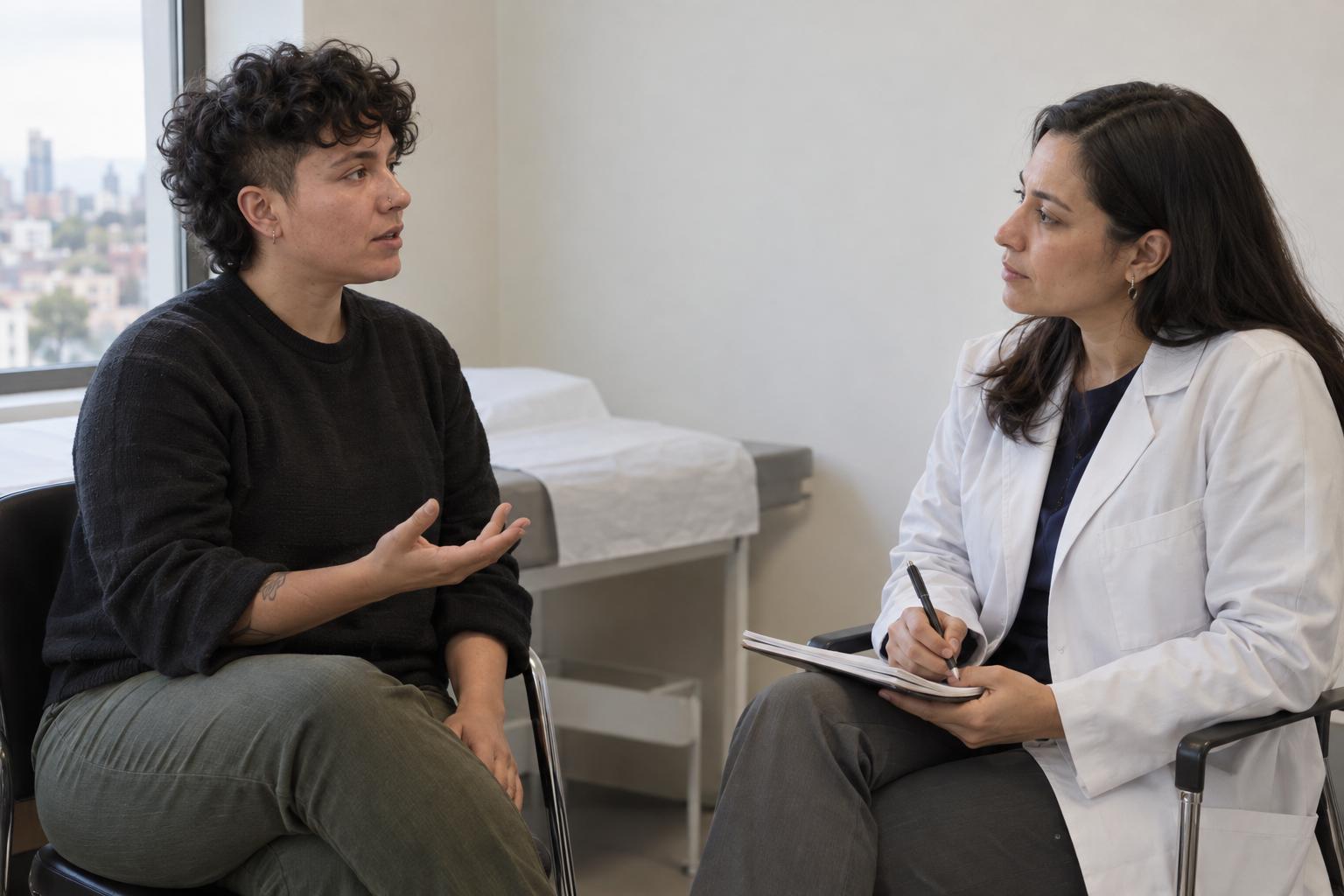
If distress is increasing or affecting sleep, relationships, school, work, or other activities, but there is no immediate danger, consider requesting an assessment soon from a mental health professional or clinical team experienced in respectful care for transgender people. There is no need to wait until distress becomes extreme. Care should be based on the person's needs, not on the idea of changing their identity.
How to prepare for a supportive conversation
You can tell someone you trust what has changed and what specific help you need: company, help contacting a service, or someone to stay nearby while care arrives. If it is helpful, describe when the increase in distress began and how it affects your daily life. This information can guide the conversation, but it does not replace a clinical assessment. If safety worsens, seek urgent care.
Assessment and follow-up
A professional can discuss immediate safety, the intensity of the distress, recent changes, and available supports to help determine the type of care. Follow-up is tailored to each person's needs and can be reviewed if the situation changes. This article provides general information and does not determine whether someone is in crisis; if there is immediate risk, the priority is to go to an emergency department or contact local emergency services.
When to seek medical care
If symptoms persist, test results are abnormal, or you have questions about medication, arrange an individual assessment. Do not change treatment or doses without medical guidance.
Frequently asked questions
Does feeling distress related to gender incongruence mean I am in crisis?
Not necessarily. Distress varies from person to person and from one situation to another. Urgency depends on safety and signs such as thoughts of self-harm or suicide, being unable to stay safe, or severe disruption to daily functioning.
Should I wait until I feel worse to ask for help?
No. You can seek professional support soon if distress increases or affects your daily life, even if there is no immediate danger.
What should I do if someone close to me cannot stay safe?
If there is immediate danger, accompany them to an emergency department or contact local emergency services. In Colombia, 123 may be an option, depending on its availability and scope in the area. If possible, stay with the person while help arrives.
Does this topic resonate with you?
Every case is different. Book a consultation to review your history, test results and goals with a personalized plan.
More articles about Gender dysphoria and hormonal health

6 min de lectura
Publicado: 7 de noviembre de 2026 · Actualizado: 7 de noviembre de 2026
Caring for Your Emotional Well-Being While Seeking Gender-Affirming Care
How to recognize when stress is affecting daily life, choose respectful support, and know when to seek help while receiving gender-affirming care.

5 min de lectura
Publicado: 7 de noviembre de 2026 · Actualizado: 7 de noviembre de 2026
Changes Since Your Last Checkup: How to Share Them Without Explaining Everything
A guide for transgender adults on choosing what to discuss at a gender-affirming care checkup, expressing questions, and agreeing on next steps without keeping a detailed log.

6 min de lectura
Publicado: 29 de octubre de 2026 · Actualizado: 29 de octubre de 2026
When Rejection Weighs on You: Seeking Respectful Care Without Treating Your Environment as the Cause of Your Identity
Rejection and discrimination do not cause gender identity, but they can affect well-being. This guide can help you prepare for a supportive conversation, ask about the approach, and consider options that respect your needs.

5 min de lectura
Publicado: 28 de octubre de 2026 · Actualizado: 28 de octubre de 2026
Before Hormone Testing: Five Preparation Mistakes to Avoid
What to confirm about your test order, fasting, timing, and medications before a hormone test. A guide for transgender adults—without stopping treatment or repeating tests on your own.
6 min de lectura
Publicado: 21 de octubre de 2026 · Actualizado: 21 de octubre de 2026
Gender-Affirming Care for Adults: Signs of a Safe and Respectful Plan
Learn how options, informed consent, and follow-up are discussed in gender-affirming care that respects each adult’s goals.

5 min de lectura
Publicado: 13 de octubre de 2026 · Actualizado: 13 de octubre de 2026
Fasting for a Medical Test When You Use Hormones: Helpful Questions to Ask Before Your Appointment
If you have a test or procedure scheduled and received fasting instructions, confirm what to do with each medication. Preparation depends on the procedure and your clinical situation.