Educational article
Traveling with a Pituitary Disorder: Medications, Schedules, and Fasting

Educational content. It does not replace an individual medical assessment and should not be used for self-medication.
Does traveling with a pituitary disorder require preparation?
It may require planning, but there is no single recommendation for everyone. The pituitary gland regulates several hormones, and pituitary disorders and their treatments vary. Before a trip or a major change in routine, discuss with your medical team what to consider based on your diagnosis, treatment, and medical history.
Myth: I can change the timing of my medications on my own
It is not safe to assume that you can. The importance of when and how to take a medication depends on the prescribed treatment. Do not stop, double, or change doses to fit your itinerary without instructions from a health professional who knows your case. If you will cross time zones or have long travel days, ask in advance how to schedule your doses and what to do if one is delayed or missed.
What should I arrange before leaving?
Check in advance that you have enough medication for the journey and your stay. Confirm how to transport and store it according to the product instructions and your medical team's guidance. When possible, carry it in its original packaging, along with an up-to-date list of your medications and your team's contact information. If you need a document for your trip, request it in advance; do not share medications or rely on being able to obtain them at your destination.
Myth: Travel fasting is the same for everyone
Fasting can have different implications depending on the pituitary disorder, medications, and reason for fasting, such as a test or a personal practice. Before starting or extending a fast, ask whether it could affect your treatment or health. Clarify what instructions to follow regarding medications, fluids, and meals, and tell your team how long you will fast and under what circumstances.
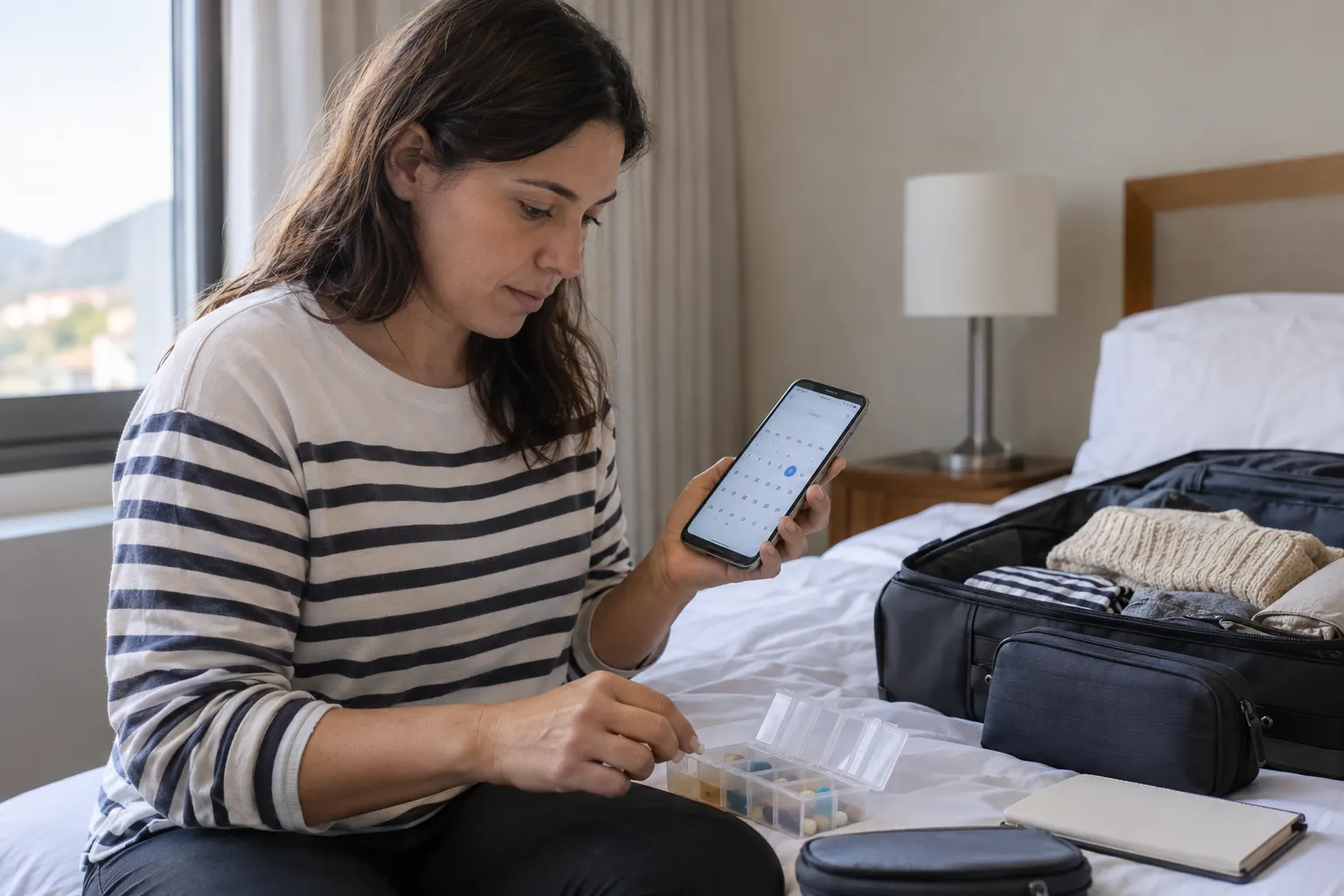
How can I plan for changes in routine and schedules?
Write down your itinerary, time differences, and activities that could change your meal or sleep schedule. Share these details with your medical team to receive an individual plan. For example, a long bus trip between cities in Colombia may disrupt your usual schedule; planning ahead gives you a chance to discuss your treatment before leaving.
Should I postpone my follow-up appointments?
Not necessarily. Before changing an appointment or test, ask whether it can wait or whether it would be better to have it before your trip. Keep recent results that your medical team considers relevant on hand, and agree on how to contact them if you have a question during your stay. Do not interpret a result on your own or change your treatment based on incomplete information.
When should I seek care during a trip?
Contact your medical team if you develop new, persistent, or worsening symptoms, or if an interruption in treatment, an illness, or another circumstance prevents you from following the agreed plan. Seek urgent care for severe or sudden symptoms, fainting, confusion, persistent vomiting, or difficulty staying hydrated. These signs do not replace the specific instructions for your diagnosis: before your trip, ask your team which symptoms require care in your case.
A practical checklist before you leave
Confirm your plan for medications and time changes; prepare enough for the entire trip; ask about fasting and follow-up care; bring relevant medical contacts; and find out where to seek care at your destination. Use the checklist to organize your conversation, not as a substitute for your team's individualized instructions.
When to seek medical care
If symptoms persist, test results are abnormal, or you have questions about medication, arrange an individual assessment. Do not change treatment or doses without medical guidance.
Frequently asked questions
What should I do if I forget a dose while traveling?
What to do depends on the medication and how much time has passed. Follow the instructions your medical team gave you for that situation. If you do not have a plan, contact them or a health professional; do not take an extra dose on your own initiative.
Can I fast if I have a pituitary disorder?
There is no single answer. Consult your medical team beforehand; they can consider your diagnosis, treatment, duration of the fast, and travel conditions.
Should I bring a list of my medications?
Yes. An up-to-date list can make it easier to get care if you need to consult someone during your trip. Include medication names and your team's contact information; do not change your prescribed doses on your own.
Does this topic resonate with you?
Every case is different. Book a consultation to review your history, test results and goals with a personalized plan.
More articles about Pituitary health

6 min de lectura
Publicado: 17 de octubre de 2026 · Actualizado: 17 de octubre de 2026
After Pituitary Surgery: Home Care and Safe Recovery
General guidance for recovery at home after transsphenoidal pituitary surgery, including nasal and activity-related care as directed at discharge, hormone follow-up, and symptoms to report to your care team.

5 min de lectura
Publicado: 17 de octubre de 2026 · Actualizado: 17 de octubre de 2026
Headache and Vision Changes: When to Consider an Urgent Pituitary Evaluation
Headaches and vision changes have many possible causes. Learn which symptoms require urgent attention and when to seek an evaluation, without assuming they are related to the pituitary gland.

5 min de lectura
Publicado: 14 de octubre de 2026 · Actualizado: 14 de octubre de 2026
One Hormone Level Doesn’t Tell the Whole Story: Key Points for Evaluating the Pituitary Gland
A hormone result outside the reference range does not, by itself, confirm a disease. Learn what context, medications, and related tests may help with interpretation, and what questions to bring to your endocrinology appointment.