Educational article
Out-of-Range Blood Calcium: How to Review the Measurement Context

Educational content. It does not replace an individual medical assessment and should not be used for self-medication.
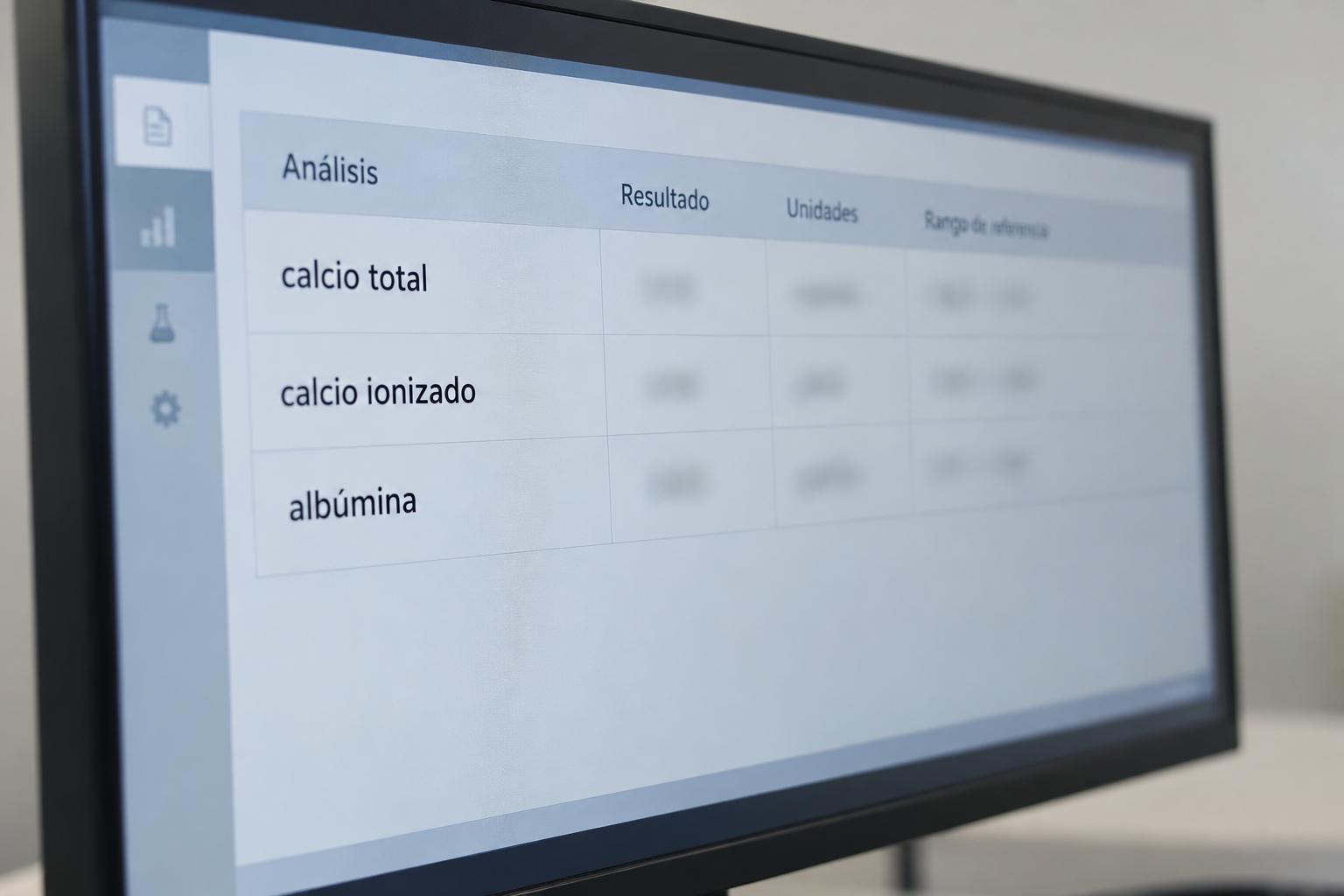
An out-of-range result needs context
Finding that your calcium is above or below the reference range may raise questions, even if you feel well. The result deserves attention, but on its own it does not identify the cause or confirm a diagnosis. Its interpretation depends on the type of measurement, other details in the report, and the person’s health situation.
Total calcium and ionized calcium: two different measurements
Total calcium measures the calcium present in the sample in different forms; ionized calcium refers to the free fraction. These results are not equivalent, and their reference ranges should not be compared as if they came from the same test. Check which one appears in your report and discuss it with the professional who ordered the test.
Why albumin may be relevant
Some calcium circulates bound to proteins, including albumin. Therefore, the albumin concentration may be relevant when interpreting total calcium. If the report includes this information, the professional can assess it alongside the result and the clinical context. Do not adjust or calculate a result on your own.
A mild change does not prove a laboratory error
The size of the abnormality alone does not allow you to conclude that an error occurred or determine what the result means. Depending on the type of measurement and the clinical context, the professional may decide that it needs review, confirmation, or no further action. Bring the complete report so the result can be assessed.
What information about the blood draw to share
Tell the professional if you have had a recent illness, if there were relevant circumstances during the blood draw, or if you have questions about the instructions you received. These details do not automatically explain an abnormal result, but they may help put it in context. Follow the specific instructions from the laboratory or medical team.
What to review in the report
Check whether total or ionized calcium was measured, and note the value, units, and reference range provided by the laboratory. See whether albumin is also listed and whether other tests were ordered at the same time. Do not compare figures from different tests without considering their units, methods, and reference ranges.
Does the test always need to be repeated?
Not necessarily. The decision depends on the result, medical history, symptoms, other tests, and clinical judgment. The professional may consider repeating the measurement or ordering additional tests if they could help clarify the finding. There is no single preparation that applies to all calcium tests: follow the instructions you received.
How to prepare for a useful conversation with your doctor
Bring the complete report, not just an image of the out-of-range value. You can also share which medications and supplements you take, including those containing calcium or vitamin D, and mention any relevant health or blood-draw circumstances. Do not stop or adjust treatments on your own; consult the professional evaluating your case.
When to seek medical care
If symptoms persist, test results are abnormal, or you have questions about medication, arrange an individual assessment. Do not change treatment or doses without medical guidance.
Frequently asked questions
If my total calcium is abnormal, should I request an ionized calcium test on my own?
Not necessarily. These are different measurements; the professional evaluating the result can determine whether ionized calcium is needed based on the clinical situation.
Can I calculate a calcium value corrected for albumin?
Do not adjust the result on your own. Albumin may be relevant when interpreting total calcium, but the professional should assess the report and the full context.
What should I bring to my appointment if the result is out of range?
Bring the complete report and a list of your medications and supplements. Also share any health or blood-draw circumstances you consider relevant. Do not change treatments before discussing them with your doctor.
Does this topic resonate with you?
Every case is different. Book a consultation to review your history, test results and goals with a personalized plan.
More articles about Parathyroid, calcium and vitamin D

5 min de lectura
Publicado: 12 de noviembre de 2026 · Actualizado: 12 de noviembre de 2026
Vitamin D and Calcium: Medical History to Share with Your Endocrinologist
Learn how kidney or digestive diseases, certain surgeries, and treatments can provide context when reviewing vitamin D, calcium, and PTH, without attributing changes to a single cause.

5 min de lectura
Publicado: 9 de noviembre de 2026 · Actualizado: 9 de noviembre de 2026
Changes in Mobility and Energy in Older Adults: When to Discuss Calcium and the Parathyroid Glands
Taking longer to stand up, walk, or complete tasks can have many causes. Learn which changes to describe and when to discuss them during a clinical evaluation, without automatically attributing them to calcium or the parathyroid glands.

6 min de lectura
Publicado: 8 de noviembre de 2026 · Actualizado: 8 de noviembre de 2026
Calcium and Vitamin D Outside Your Routine: Planning for Travel, Fasting, and Different Schedules
What to discuss with your care team about calcium, vitamin D, fasting, and timing before traveling or changing your routine—without changing your treatment on your own.
5 min de lectura
Publicado: 5 de noviembre de 2026 · Actualizado: 5 de noviembre de 2026
A Simple Plan for Keeping Up With Your Parathyroid Care During Busy Weeks
Practical strategies to help you remember your parathyroid, calcium, and vitamin D instructions during busy weeks, without changing your treatment on your own.

5 min de lectura
Publicado: 3 de noviembre de 2026 · Actualizado: 3 de noviembre de 2026
Medications for Hyperparathyroidism: When to Control Calcium and When to Protect Bone Health
Cinacalcet, bisphosphonates, and denosumab may serve different purposes. Learn which aspects of blood calcium and bone health they may address and why the choice and monitoring depend on each individual case.

5 min de lectura
Publicado: 3 de noviembre de 2026 · Actualizado: 3 de noviembre de 2026
Low Vitamin D and the Parathyroid Glands: Preventing Ongoing Changes from Affecting Bones and Muscles
Insufficient vitamin D may raise PTH as a compensatory response and affect bone metabolism. Learn how these results are interpreted and why correction should be individualized.