Educational article
Between Parathyroid Checkups: A Brief Record That Can Help at Your Appointment

Educational content. It does not replace an individual medical assessment and should not be used for self-medication.
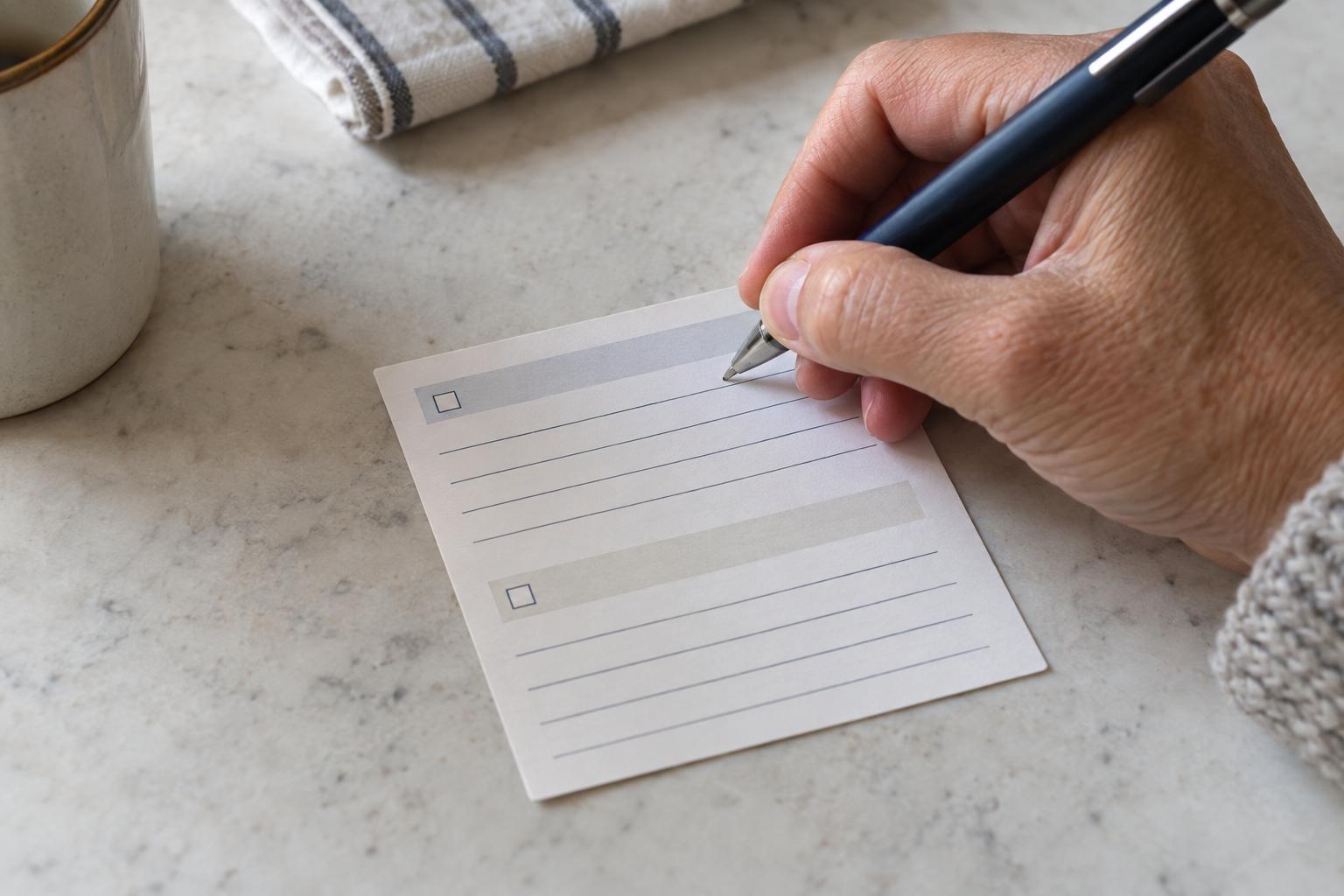
Do I have to write down every sensation for my appointment to be useful?
No. A useful record is not a continuous diary or a way to monitor every change in your body. Write down only relevant changes that can help reconstruct what happened between checkups. Isolated sensations cannot, on their own, tell you what your calcium level is; this is assessed in the context of your clinical situation and, when appropriate, through lab tests.
Myth: If I don’t bring a detailed list, I’ll forget something important
You don’t need to remember every day. You can note when you started or stopped a medication or supplement as instructed, when the agreed plan changed, or when something happened that affected your routine. If you don’t remember the exact date, an approximate reference—for example, “early October”—may be enough.
What information should I include?
Limit it to three details: what changed, approximately when it happened, and what circumstances help explain it. Record medication or supplement changes as instructed, without adjusting doses on your own. You can also mention an illness, difficulty following the plan, or a major change in your routine if it provides helpful context.
A brief note, on paper or on your phone
Choose the format that’s easiest for you and keep the structure simple. For example: “In late September, the care team instructed me to start the supplement. In mid-October, they instructed me to stop it. That week, I had an infection and ate less than usual.” You don’t need lengthy explanations or to review the note every day; update it when something relevant happens.
What if I only remember something once I’m at the appointment?
Tell your clinician without worry, and clarify that the date or detail is approximate. You can also bring any questions you have or ask for help organizing the information. The goal is to support a clinical conversation, not to provide a perfect record.
The record supports checkups; it does not replace them
A personal note does not measure blood calcium or confirm a calcium or parathyroid disorder. Do not replace recommended lab tests or clinical evaluation with symptoms, apps, or home devices. If it’s helpful, bring your note and treatment information, and follow the plan agreed on with your medical team.
When should I not wait until my next checkup?
If you experience a severe or sudden-onset symptom, seek medical guidance without waiting for your next checkup, and explain when it began and what was happening. If it seems like an emergency, go to an emergency department. Do not delay seeking care to complete the record.
A small amount of recordkeeping may be enough
You can make one note for each relevant change and review it before your checkup. If keeping a record makes you anxious or feels like a constant obligation, simplify the format or discuss it with your medical team. The record should be manageable and support your care, not become a daily task.
When to seek medical care
If symptoms persist, test results are abnormal, or you have questions about medication, arrange an individual assessment. Do not change treatment or doses without medical guidance.
Frequently asked questions
Should I write down every symptom between calcium checkups?
No. Record relevant changes and approximate dates; you don’t need to write down every sensation. Symptoms alone do not determine your calcium level.
Can I use my record to decide whether to change my supplements?
No. The record is for sharing information, not for deciding on treatment changes. Consult the team overseeing your care before changing medications or supplements.
What should I do if I have a severe symptom before my next appointment?
Seek medical guidance without waiting for your checkup. If it seems like an emergency, go to an emergency department; do not delay care to complete the record.
Does this topic resonate with you?
Every case is different. Book a consultation to review your history, test results and goals with a personalized plan.
More articles about Parathyroid, calcium and vitamin D

5 min de lectura
Publicado: 12 de noviembre de 2026 · Actualizado: 12 de noviembre de 2026
Vitamin D and Calcium: Medical History to Share with Your Endocrinologist
Learn how kidney or digestive diseases, certain surgeries, and treatments can provide context when reviewing vitamin D, calcium, and PTH, without attributing changes to a single cause.

5 min de lectura
Publicado: 9 de noviembre de 2026 · Actualizado: 9 de noviembre de 2026
Changes in Mobility and Energy in Older Adults: When to Discuss Calcium and the Parathyroid Glands
Taking longer to stand up, walk, or complete tasks can have many causes. Learn which changes to describe and when to discuss them during a clinical evaluation, without automatically attributing them to calcium or the parathyroid glands.

6 min de lectura
Publicado: 8 de noviembre de 2026 · Actualizado: 8 de noviembre de 2026
Calcium and Vitamin D Outside Your Routine: Planning for Travel, Fasting, and Different Schedules
What to discuss with your care team about calcium, vitamin D, fasting, and timing before traveling or changing your routine—without changing your treatment on your own.
5 min de lectura
Publicado: 5 de noviembre de 2026 · Actualizado: 5 de noviembre de 2026
A Simple Plan for Keeping Up With Your Parathyroid Care During Busy Weeks
Practical strategies to help you remember your parathyroid, calcium, and vitamin D instructions during busy weeks, without changing your treatment on your own.

5 min de lectura
Publicado: 3 de noviembre de 2026 · Actualizado: 3 de noviembre de 2026
Medications for Hyperparathyroidism: When to Control Calcium and When to Protect Bone Health
Cinacalcet, bisphosphonates, and denosumab may serve different purposes. Learn which aspects of blood calcium and bone health they may address and why the choice and monitoring depend on each individual case.

5 min de lectura
Publicado: 3 de noviembre de 2026 · Actualizado: 3 de noviembre de 2026
Low Vitamin D and the Parathyroid Glands: Preventing Ongoing Changes from Affecting Bones and Muscles
Insufficient vitamin D may raise PTH as a compensatory response and affect bone metabolism. Learn how these results are interpreted and why correction should be individualized.