Educational article
Symptoms That Come and Go: What to Track When You’re Being Evaluated for Calcium or Vitamin D

Educational content. It does not replace an individual medical assessment and should not be used for self-medication.

How observing a symptom that comes and goes can help
If a symptom goes away and then returns, describing that pattern may be useful when talking with a healthcare professional. Intermittent symptoms neither confirm nor rule out a calcium, vitamin D, or parathyroid disorder. Similar symptoms can have different explanations and should be interpreted along with your health history and, when appropriate, a clinical evaluation.
Record days with and without symptoms
Note the date and whether you noticed the symptom that day. Including symptom-free days helps describe the full pattern rather than relying only on your memory of the most recent episode. A brief, consistent note is usually more useful than trying to reconstruct several days from memory.
Describe the intensity and duration
You can use a simple scale—for example, mild, moderate, or severe—and apply it consistently. Note approximately when the symptom began, how long it lasted, and whether it went away completely or left any lingering sensation. You do not need to measure precisely or do tests at home.
Record the context without assuming causes
If you think it is relevant, note activities, rest, food, medications prescribed by a healthcare professional, or other changes in your routine. Treat these as contextual details, not causes: the fact that something happened before a symptom does not prove that it caused it. Do not change medications or habits on your own to test a possible connection.
Describe how it affects your activities
Note whether the symptom interrupted your sleep, made it difficult to walk, move around, work, or study, or caused you to stop what you were doing. Describing what you could and could not do helps explain the impact of the episode as well as its intensity.
Summarize the pattern for your appointment
If you are being evaluated for calcium, vitamin D, or parathyroid issues, share when the symptom occurs, how long it lasts, how often it returns, and how it affects your activities. Mention recent changes and any other symptoms you have noticed. The record can help organize the conversation, but it does not replace an evaluation or any tests the healthcare professional considers appropriate.
When to seek guidance
Talk with a healthcare professional if symptoms persist, worsen, recur, or concern you, even if they go away on some days. If the discomfort is severe or you experience a sudden decline, seek care without waiting to finish your record. This guide cannot determine the cause or replace a medical evaluation.
When to seek medical care
If symptoms persist, test results are abnormal, or you have questions about medication, arrange an individual assessment. Do not change treatment or doses without medical guidance.
Frequently asked questions
Should I mention a symptom that has already gone away?
Yes, if it concerns you, returns, or has changed. Improvement between episodes neither confirms nor rules out a cause.
Can the record tell me whether my calcium is abnormal?
No. It helps describe what you have observed, but symptoms can have different explanations. Interpretation requires a clinical evaluation and, if considered necessary, tests.
What should I do if the symptom gets worse while I’m keeping a record?
Do not delay care to finish your notes. Seek medical help if the discomfort is severe or you experience a sudden decline.
Does this topic resonate with you?
Every case is different. Book a consultation to review your history, test results and goals with a personalized plan.
More articles about Parathyroid, calcium and vitamin D

5 min de lectura
Publicado: 12 de noviembre de 2026 · Actualizado: 12 de noviembre de 2026
Vitamin D and Calcium: Medical History to Share with Your Endocrinologist
Learn how kidney or digestive diseases, certain surgeries, and treatments can provide context when reviewing vitamin D, calcium, and PTH, without attributing changes to a single cause.

5 min de lectura
Publicado: 9 de noviembre de 2026 · Actualizado: 9 de noviembre de 2026
Changes in Mobility and Energy in Older Adults: When to Discuss Calcium and the Parathyroid Glands
Taking longer to stand up, walk, or complete tasks can have many causes. Learn which changes to describe and when to discuss them during a clinical evaluation, without automatically attributing them to calcium or the parathyroid glands.

6 min de lectura
Publicado: 8 de noviembre de 2026 · Actualizado: 8 de noviembre de 2026
Calcium and Vitamin D Outside Your Routine: Planning for Travel, Fasting, and Different Schedules
What to discuss with your care team about calcium, vitamin D, fasting, and timing before traveling or changing your routine—without changing your treatment on your own.
5 min de lectura
Publicado: 5 de noviembre de 2026 · Actualizado: 5 de noviembre de 2026
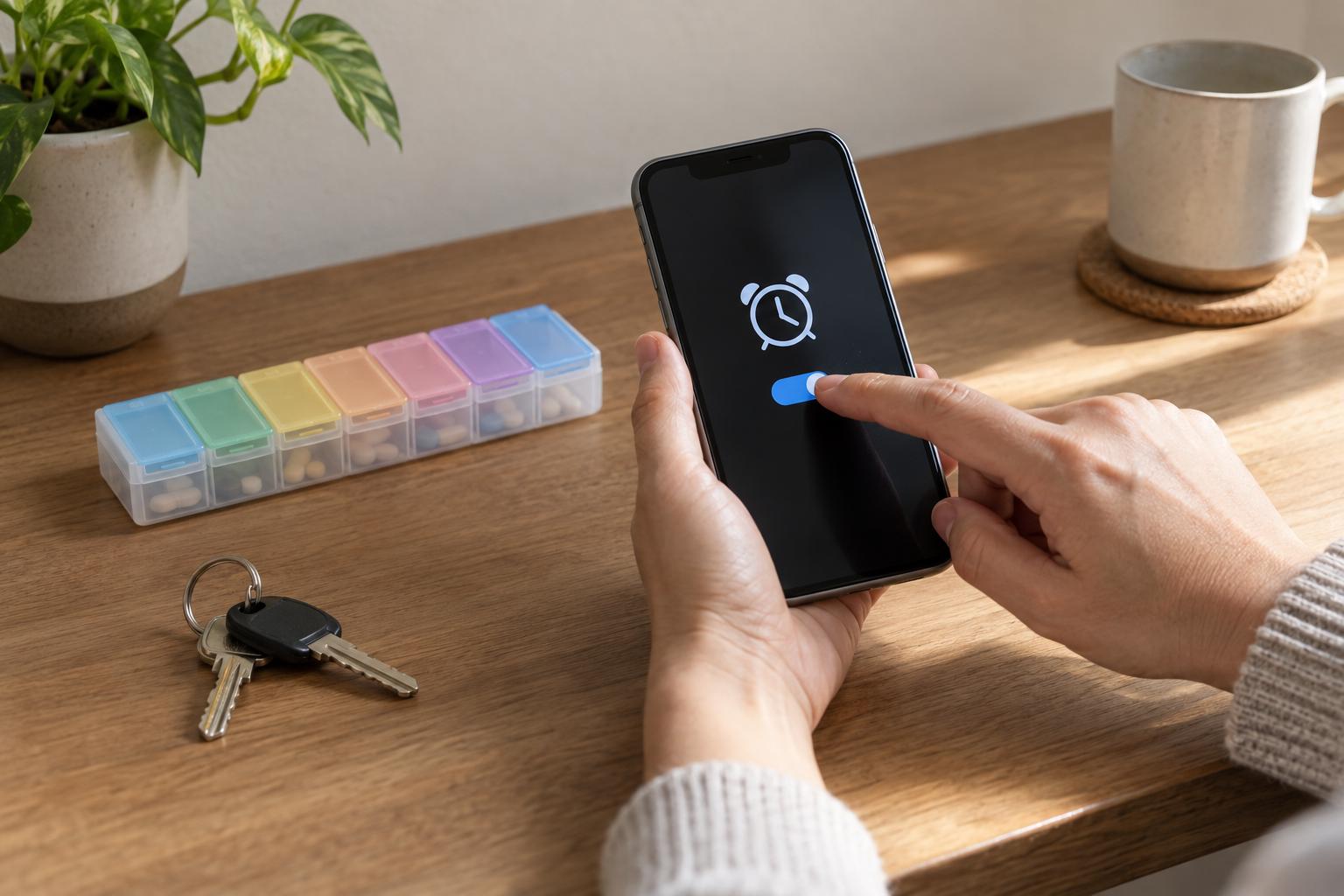
A Simple Plan for Keeping Up With Your Parathyroid Care During Busy Weeks
Practical strategies to help you remember your parathyroid, calcium, and vitamin D instructions during busy weeks, without changing your treatment on your own.

5 min de lectura
Publicado: 3 de noviembre de 2026 · Actualizado: 3 de noviembre de 2026
Medications for Hyperparathyroidism: When to Control Calcium and When to Protect Bone Health
Cinacalcet, bisphosphonates, and denosumab may serve different purposes. Learn which aspects of blood calcium and bone health they may address and why the choice and monitoring depend on each individual case.

5 min de lectura
Publicado: 3 de noviembre de 2026 · Actualizado: 3 de noviembre de 2026
Low Vitamin D and the Parathyroid Glands: Preventing Ongoing Changes from Affecting Bones and Muscles
Insufficient vitamin D may raise PTH as a compensatory response and affect bone metabolism. Learn how these results are interpreted and why correction should be individualized.