Educational article
An Adrenal Gland Finding on Imaging: How Follow-Up Is Usually Organized

Educational content. It does not replace an individual medical assessment and should not be used for self-medication.
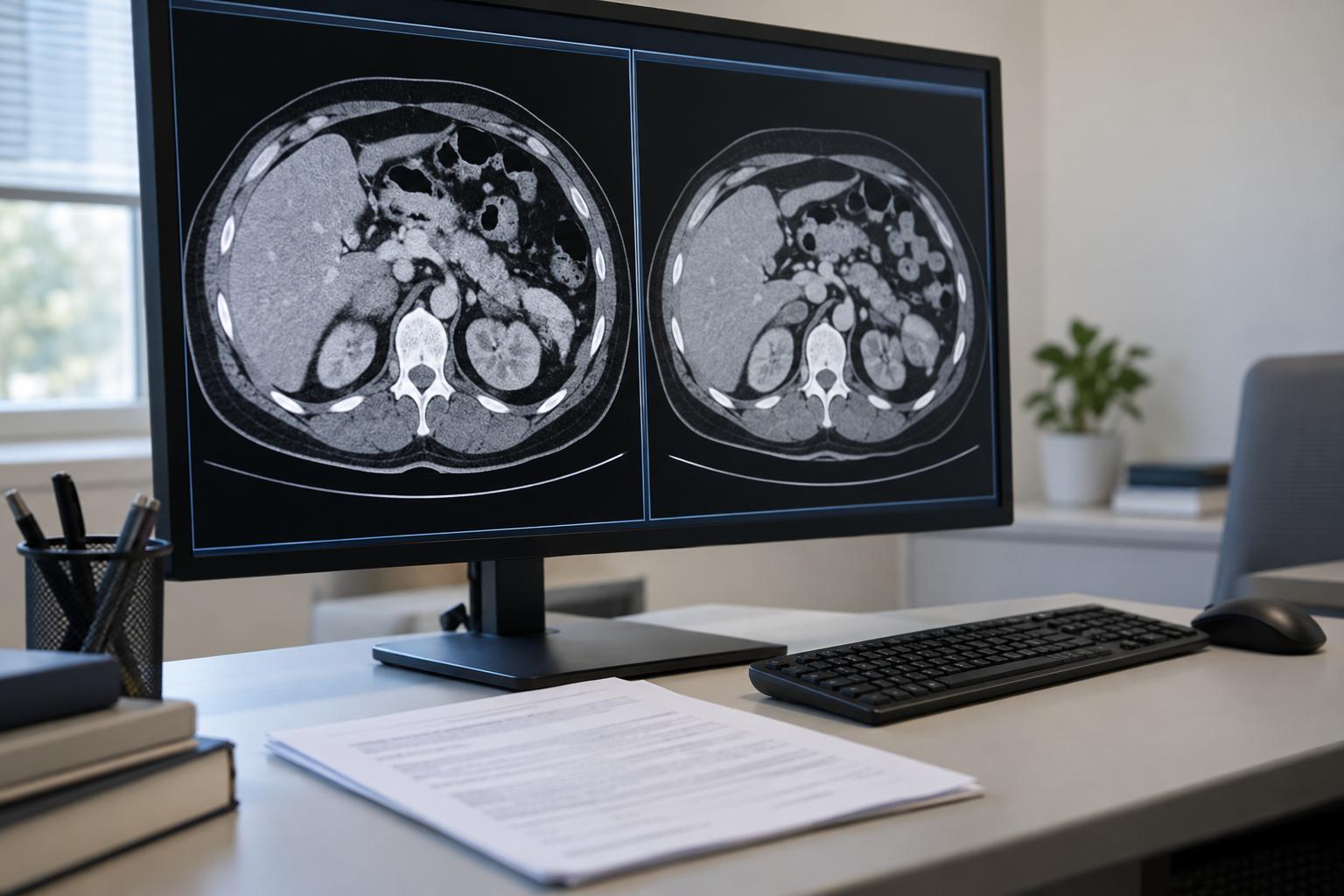
An Incidental Finding Is Not a Diagnosis
Sometimes an ultrasound, CT, or MRI ordered for another reason shows a lesion or nodule in an adrenal gland. It is called an incidental finding because it was not the main focus of the study. The report alone does not confirm cancer or show that the gland is producing excess hormones.
Why It Is Reviewed in Context
The adrenal glands sit above the kidneys and may appear on abdominal imaging. To evaluate a finding, the clinician considers its radiologic features, the reason for the exam, the patient’s medical history, and, when available, prior images. Not all findings have the same significance or require the same approach.
Myth: “If It Says Nodule, It Must Be Cancer”
Nodule or lesion describes something seen on an image; it does not, by itself, establish what it is. The report provides useful information, but interpreting it requires context and, sometimes, a review of the images. Avoid drawing conclusions from a single word in the report.
Myth: “If I Have No Symptoms, There’s Nothing to Review”
The absence of symptoms alone cannot tell you whether a finding needs evaluation. Depending on the case, the clinician may consider hormone tests, additional imaging, or no further testing. The decision depends on the available clinical and radiologic information.
What Documents to Bring to Your Evaluation
Bring the complete report and, if possible, the study images. Prior abdominal tests may also be useful for comparison, even if they were done for another reason. Make a note of the medications you take, relevant medical history, and any questions raised by the report.
What the Evaluation May Include
The clinician will review the reason for the exam, the features described, and your medical history. Based on that evaluation, they may consider hormone tests or additional imaging. There is no single test that applies to everyone; avoid interpreting images or results on your own.
Follow-Up Is Decided Case by Case
After reviewing the information, the healthcare team may recommend monitoring, additional tests, or other options. Whether follow-up is needed, and when, is determined individually: there is no fixed schedule for every adrenal nodule. An incidental finding also does not automatically mean surgery is needed.
When to Ask for Guidance About the Report
Request an evaluation to clarify what the finding means in your situation and whether further testing is needed. If the report recommends follow-up, discuss it with a clinician who knows your medical history. Tell your healthcare team about new symptoms or changes that concern you; this article cannot determine their cause or replace a consultation.
When to seek medical care
If symptoms persist, test results are abnormal, or you have questions about medication, arrange an individual assessment. Do not change treatment or doses without medical guidance.
Frequently asked questions
Does an incidental adrenal finding mean I have cancer?
No. An imaging finding does not confirm cancer. Its significance is evaluated based on its radiologic features and your medical history; the report alone cannot establish a diagnosis.
Are hormone tests or additional imaging always needed?
Not necessarily. The clinician may consider them based on the features of the finding, your medical history, and the clinical evaluation. The same approach does not apply to everyone.
What should I bring to my appointment?
Bring the report and, if possible, the study images and prior tests for comparison. It is also helpful to share your medical history, medications, and questions.
Does this topic resonate with you?
Every case is different. Book a consultation to review your history, test results and goals with a personalized plan.
More articles about Adrenal glands

6 min de lectura
Publicado: 1 de noviembre de 2026 · Actualizado: 1 de noviembre de 2026
After Long-Term Corticosteroid Use: When to Consider Adrenal Suppression
Prolonged or repeated glucocorticoid use can temporarily reduce the body’s own cortisol production. Learn what history to gather and why you should not change treatment without professional guidance.

5 min de lectura
Publicado: 31 de octubre de 2026 · Actualizado: 31 de octubre de 2026
It Takes You Longer to Recover After Everyday Activities: When to Consider the Adrenal Glands
If everyday activities such as climbing stairs leave you feeling tired for a long time, learn what information can help make sense of the change and why it is not enough to attribute it to the adrenal glands.

6 min de lectura
Publicado: 31 de octubre de 2026 · Actualizado: 31 de octubre de 2026
Living With Adrenal Replacement Therapy: Habits That Support a Safe Routine
How to organize hormone replacement for adrenal insufficiency around changes in schedules, exercise, and travel, without replacing the individual plan recommended by your healthcare team.

6 min de lectura
Publicado: 15 de octubre de 2026 · Actualizado: 15 de octubre de 2026
Fatigue in Older Adults: When to Consider the Adrenal Glands—and When Not To
Fatigue and dizziness in older adults can have many causes. Age does not mean the adrenal glands are failing: learn when a healthcare professional may consider evaluating cortisol.

5 min de lectura
Publicado: 24 de septiembre de 2026 · Actualizado: 24 de septiembre de 2026
Daily Eating and Adrenal Health: How to Choose Without Seeking a Perfect Diet
Learn what to consider in your daily eating if you have an adrenal condition, and why guidance about salt, fluids, or restrictions should be tailored to your situation.

6 min de lectura
Publicado: 19 de septiembre de 2026 · Actualizado: 19 de septiembre de 2026
Urine or Salivary Cortisol: Collection Errors That May Require Repeating the Test
A guide to collecting 24-hour urine or saliva for cortisol testing and what to do if a sample is spilled, a collection is missed, or you have questions about timing or storage. The laboratory will confirm whether the sample can be processed or needs to be recollected.