Educational article
Traveling as a Trans Person: How to Maintain Access to Your Hormones During Your Trip

Educational content. It does not replace an individual medical assessment and should not be used for self-medication.
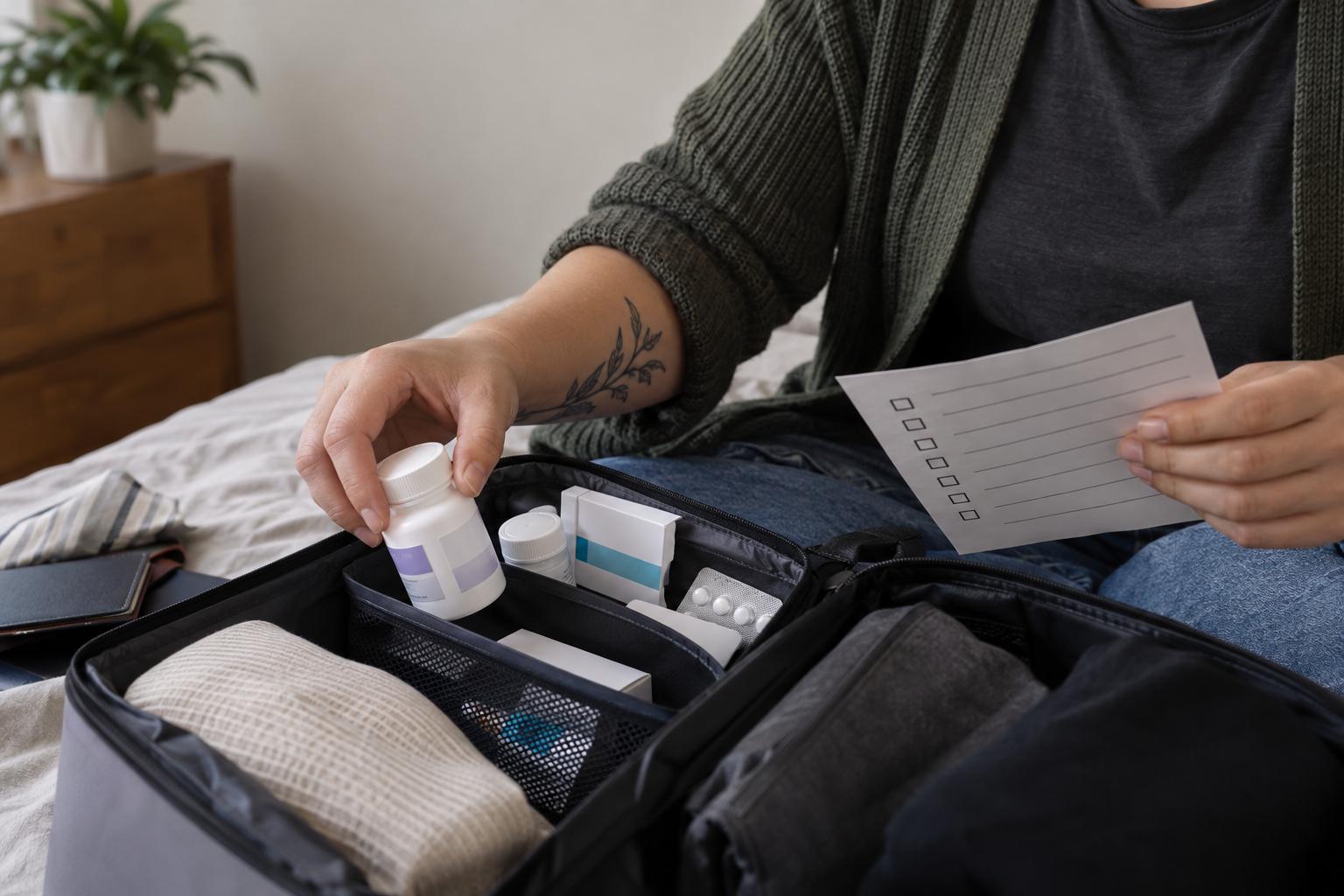
Check your supply before you leave
Compare the amount you have with the length of your trip, including travel days. If you might not have enough, contact your care team or the person who manages your care in advance to ask about supply options. Do not change your dose or how you take the medication to make it last longer.
Confirm what you need to obtain or transport your medication
Availability and requirements may vary depending on the product, route, and destination. Ask whether you need to arrange a prescription or another document, and check the current information from the airline and the place you are traveling to. Do not assume you will be able to obtain the same product at your destination.
Organize your medications and their identification
Whenever possible, keep medications in their original containers with their labels, and carry an up-to-date list of their names. Avoid relying only on unidentified containers. Keep your care team's contact information somewhere accessible, without unnecessarily exposing personal information.
Check storage conditions
Instructions depend on the medication and its formulation. Review the product-specific information and consult a health professional or pharmacist if you have questions about heat, cold, light, or temperature changes. Also consider extended waits, layovers, and other travel conditions.
Plan for timing and access during your trip
Pack so you can access your medication when needed and avoid conditions that conflict with its instructions. If a time-zone change, connection, or delay could affect your usual schedule, ask before traveling what to do in your situation. Do not take doses early, delay them, or double them on your own.
Prepare for unexpected problems
Keep your medication list and relevant contacts handy in case your luggage is delayed or an access problem arises. If you cannot find your supply, seek professional guidance before substituting the product or changing your regimen. This planning can make it easier to explain what treatment you use, but it does not guarantee that it will be available at your destination.
Discuss any difficulties when you return
If your trip affected access to, storage of, or the timing of your treatment, discuss it with your care team. If you have questions after missing a dose, ask how to proceed rather than trying to make up for it on your own.
When to seek medical care
If symptoms persist, test results are abnormal, or you have questions about medication, arrange an individual assessment. Do not change treatment or doses without medical guidance.
Frequently asked questions
Can I change the timing of my treatment to fit my destination?
There is no universal rule: it depends on the medication and the prescribed regimen. Consult your health professional before traveling, and do not adjust your doses on your own.
Should I bring extra medication?
This depends on your prescription and supply options. Check in advance how much you have and ask your care team how to plan, without changing your regimen.
How can I tell whether my medication can be exposed to heat or cold while traveling?
Check the product-specific storage instructions and seek professional guidance if your trip could expose it to different temperatures. Recommendations are not the same for all medications.
Does this topic resonate with you?
Every case is different. Book a consultation to review your history, test results and goals with a personalized plan.
More articles about Gender dysphoria and hormonal health

6 min de lectura
Publicado: 9 de noviembre de 2026 · Actualizado: 9 de noviembre de 2026
Gender-Related Distress in Adults: How to Recognize an Emotional Crisis and Seek Safe Support
Being transgender is not an illness. Learn to distinguish gender-related distress from a situation that may require urgent care, and explore safe steps for seeking support.

6 min de lectura
Publicado: 7 de noviembre de 2026 · Actualizado: 7 de noviembre de 2026
Caring for Your Emotional Well-Being While Seeking Gender-Affirming Care
How to recognize when stress is affecting daily life, choose respectful support, and know when to seek help while receiving gender-affirming care.

5 min de lectura
Publicado: 7 de noviembre de 2026 · Actualizado: 7 de noviembre de 2026
Changes Since Your Last Checkup: How to Share Them Without Explaining Everything
A guide for transgender adults on choosing what to discuss at a gender-affirming care checkup, expressing questions, and agreeing on next steps without keeping a detailed log.

6 min de lectura
Publicado: 29 de octubre de 2026 · Actualizado: 29 de octubre de 2026
When Rejection Weighs on You: Seeking Respectful Care Without Treating Your Environment as the Cause of Your Identity
Rejection and discrimination do not cause gender identity, but they can affect well-being. This guide can help you prepare for a supportive conversation, ask about the approach, and consider options that respect your needs.

5 min de lectura
Publicado: 28 de octubre de 2026 · Actualizado: 28 de octubre de 2026
Before Hormone Testing: Five Preparation Mistakes to Avoid
What to confirm about your test order, fasting, timing, and medications before a hormone test. A guide for transgender adults—without stopping treatment or repeating tests on your own.

6 min de lectura
Publicado: 21 de octubre de 2026 · Actualizado: 21 de octubre de 2026
Gender-Affirming Care for Adults: Signs of a Safe and Respectful Plan
Learn how options, informed consent, and follow-up are discussed in gender-affirming care that respects each adult’s goals.