Educational article
Menstrual Cycle and Shift Work: Practical Notes Without Watching the Clock

Educational content. It does not replace an individual medical assessment and should not be used for self-medication.

Tracking your cycle without relying on a fixed time
A menstrual record can help you review the sequence of bleeding and other symptoms. If you work nights or rotating shifts, note what happened and on what date; add shift or sleep context when it helps you interpret the sequence. You do not need to complete the record at the same time every day.
What information may be useful
Choose a few observations you can keep up with: the start and end dates of bleeding, approximate intensity if that is useful to you, one or two symptoms, and your main sleep period. You do not need to describe every sensation or measure it precisely. For sleep, it is enough to note when you slept or whether it was before or after your shift.
How to record night or rotating shifts
Use a simple convention and stick with it. Record each event on the date it happened and add a brief note, such as “before shift,” “after shift,” or “after main sleep.” If a shift crosses midnight, you can clarify that the event occurred during the night shift.
An everyday example
Someone alternating between day and night shifts might note: “Tuesday: bleeding started, before night shift” and, the next day, “Wednesday: slept after getting home; mild pain on waking.” This is a way to organize information, not a clinical rule or an explanation for why a change occurred.
Observing patterns without jumping to conclusions
A few notes may not be enough to distinguish a usual variation from a change that merits review. A change in schedule occurring at the same time as a change in your cycle does not prove that one caused the other. Record what you observe neutrally and review the sequence with a health professional if you have questions. The record can guide the conversation, but it does not diagnose menstrual or sleep disorders.
How to keep the record simple
Do not reconstruct information you cannot remember accurately or try to make every entry identical. Avoid relying on an alarm at a fixed time if your schedule changes, or recording so many symptoms that tracking becomes exhausting. If you cannot make a note one day, resume when you can: practical consistency matters more than completing every detail.
Preparing a summary for an appointment
You can gather the dates of bleeding, the symptoms that concern you, and a brief description of your shifts: nights, rotations, or days off between shifts. Include your sleep pattern only if it provides context, and indicate which details are approximate. The health professional will interpret this information along with your history and other clinical factors.
When to seek professional guidance
Seek guidance if you notice a persistent change from your usual pattern, symptoms that affect your daily life, or anything that concerns you. You do not need to wait until you have a complete record. Seek urgent care if bleeding is so heavy that you soak through a pad or tampon every hour for several hours, or if it is accompanied by fainting, severe weakness, or difficulty standing. Night shifts provide context, but they should not be assumed to be the only explanation for a change.
When to seek medical care
If symptoms persist, test results are abnormal, or you have questions about medication, arrange an individual assessment. Do not change treatment or doses without medical guidance.
Frequently asked questions
Do I have to record my cycle at the same time every day?
No. Record events by date and, when the context is useful, note whether they occurred before or after your shift or main sleep period.
Is an incomplete record no longer useful?
Not necessarily. Note what you remember clearly, mark what is approximate, and continue when you can. You do not need to reconstruct missing information as though it were exact.
Does night work alone explain cycle changes?
You cannot conclude that from a few notes. Shifts provide context, but menstrual changes can have different explanations and should be interpreted individually.
Does this topic resonate with you?
Every case is different. Book a consultation to review your history, test results and goals with a personalized plan.
More articles about Female reproductive endocrinology

5 min de lectura
Publicado: 7 de noviembre de 2026 · Actualizado: 7 de noviembre de 2026
From the First Period to Adult Cycles: How Menstrual Patterns Change With Age
Learn how the menstrual cycle may vary during the first years after menarche, what information to track, and which changes may warrant a clinical evaluation.

5 min de lectura
Publicado: 5 de noviembre de 2026 · Actualizado: 5 de noviembre de 2026
Hormonal Treatments for Menstrual Cycle Disorders: Safe Decisions Before Starting or Changing Treatment
What to review before starting, restarting, or changing hormonal treatment for menstrual disorders, what to do about a missed dose, and when to seek guidance.

6 min de lectura
Publicado: 5 de noviembre de 2026 · Actualizado: 5 de noviembre de 2026
Eating to Support Your Reproductive Health: Practical Habits Without Extreme Diets
General guidance on eating a varied and sufficient diet, its role in reproductive health care, and why no food can guarantee menstrual cycle or hormone regulation.

6 min de lectura
Publicado: 2 de noviembre de 2026 · Actualizado: 2 de noviembre de 2026
Inherited and Acquired Factors in Ovarian Health: Useful Questions to Organize Your History
Learn what family and personal information can help put menstrual changes and ovarian function into context, and why that history alone is not enough to establish a diagnosis.

5 min de lectura
Publicado: 1 de noviembre de 2026 · Actualizado: 1 de noviembre de 2026
Trying to Get Pregnant and Noticing Changes in Your Cycle? What Information to Bring to Your Appointment
What dates, medical history, and medications to bring to an appointment if you are trying to get pregnant and have noticed changes in your menstrual cycle.
6 min de lectura
Publicado: 20 de octubre de 2026 · Actualizado: 20 de octubre de 2026
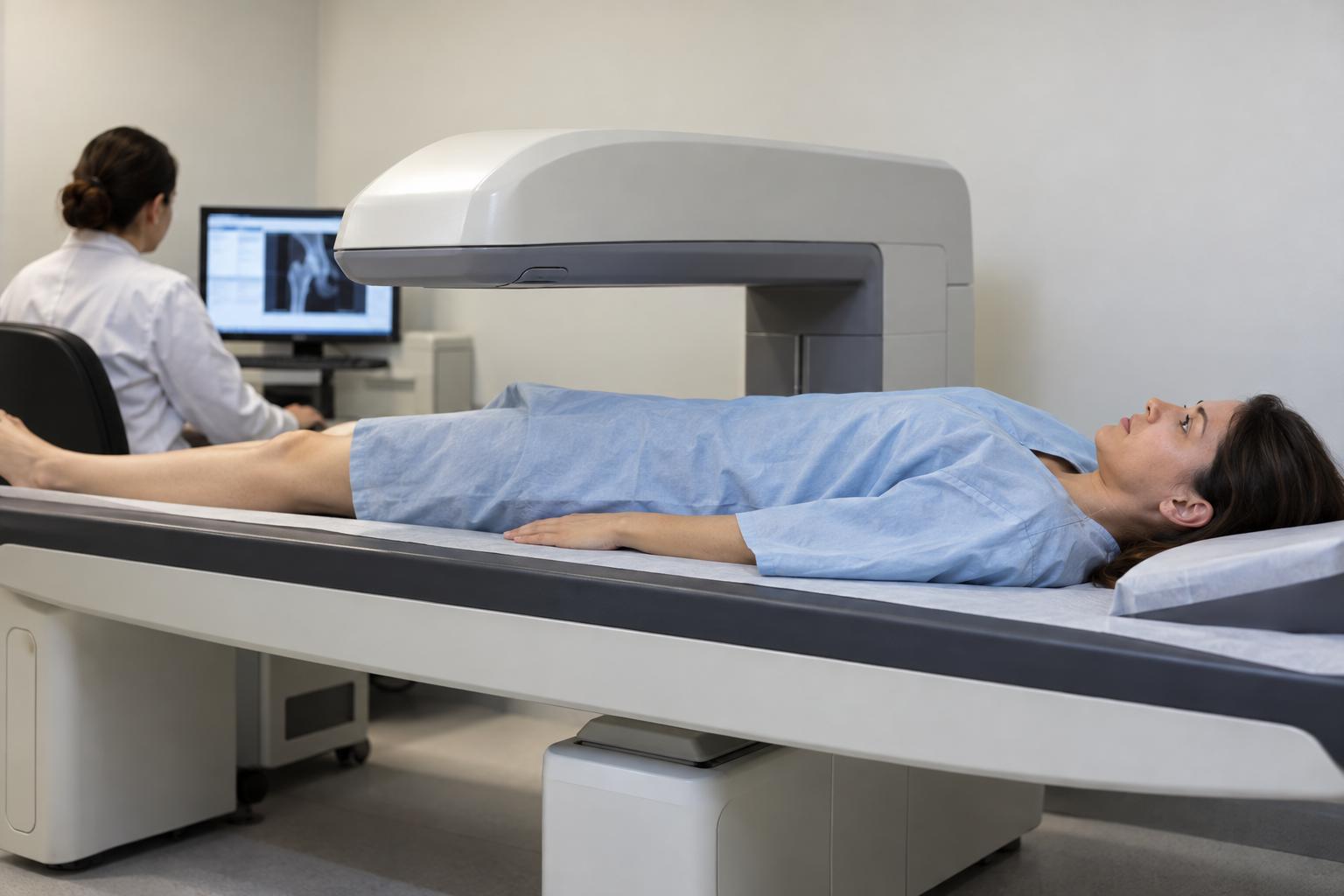
Months Without a Period: Why It’s Worth Checking Bone Health Too
A missed period can have many causes. Learn when to rule out pregnancy, how clinicians decide whether to assess bone density, and when to seek medical guidance.