Educational article
Supplements and Hormones for Menstrual Cycles: How to Avoid Combining Products on Your Own

Educational content. It does not replace an individual medical assessment and should not be used for self-medication.
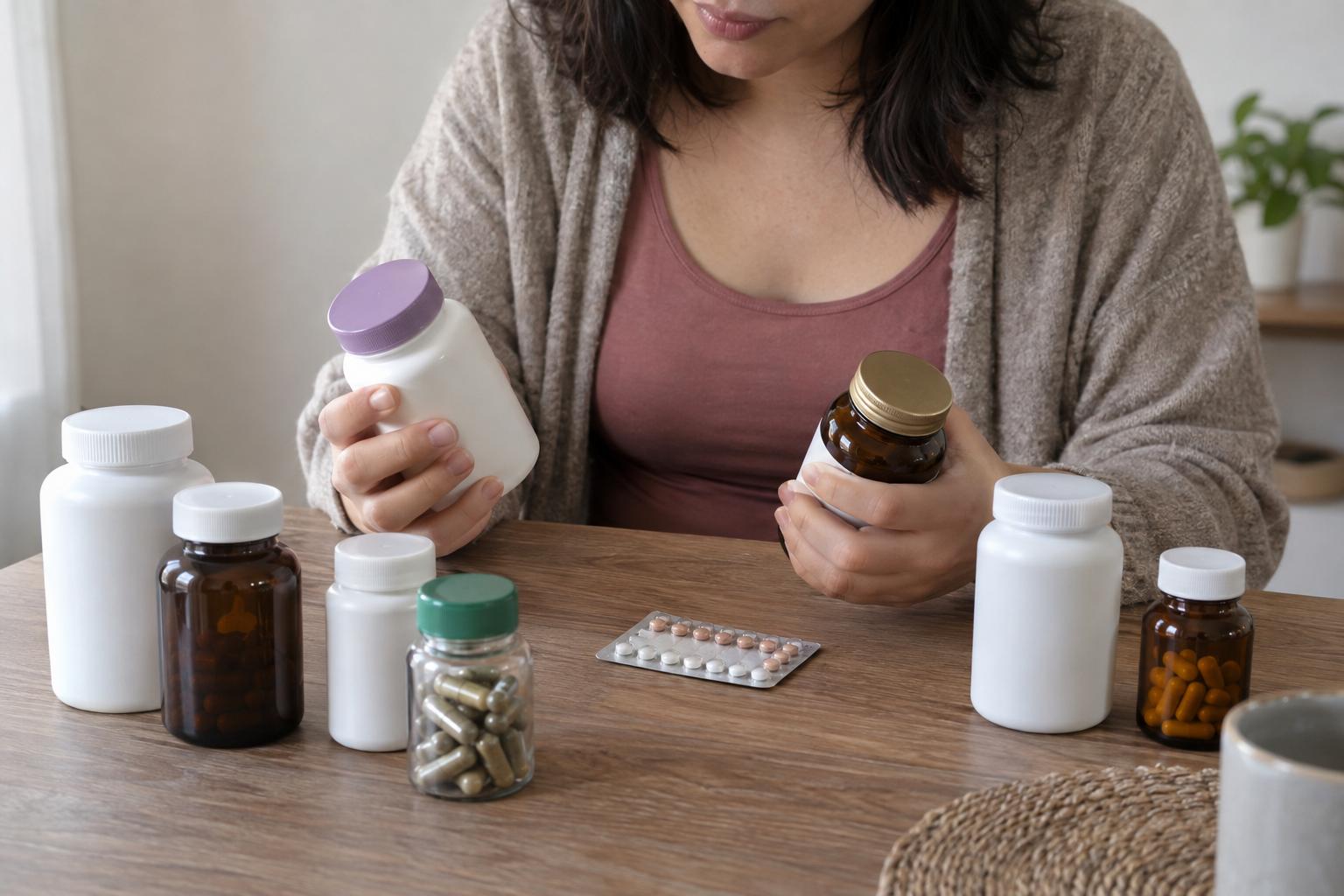
What it means to combine products with hormonal therapy
Combining products on your own means adding, stopping, or replacing a supplement, herbal product, or medication without reviewing the change with the care team that prescribed the hormonal therapy. Even if the goal is to regulate your cycle or feel better, “natural” does not necessarily mean harmless or appropriate for every cause of menstrual changes. Whether a product is appropriate depends on its ingredients, the medications a person already uses, and the reason for treatment. This guide does not recommend supplements or suggest changing a treatment plan; it helps you prepare for an informed conversation with your healthcare professional.
When to review a combination
Consult a healthcare professional before starting a product if the recommendation comes from social media, someone you know, or a source that does not know your medical history. It is also a good idea to review products that promise to replace hormones or regulate your cycle without explaining who they were studied in or what problem they are intended to address. If you notice an unexpected effect or a change in bleeding after starting a product, tell your care team. This observation alone does not prove what caused the change, but it may help guide the next steps.
Recommendations should address an identified cause
Menstrual disorders can have different causes and may require different evaluations. A description such as “irregular cycle” does not, by itself, explain the reason or indicate which product may be appropriate. Before adding anything, ask what problem the product is intended to address and what clinical information supports the recommendation. Your care team may consider the diagnosis, medical history, current medications and supplements, and treatment goals. A recommendation does not necessarily apply to everyone with similar symptoms.
What information to bring to the conversation
Tell your care team about all medications, supplements, and herbal products you use, including those you take occasionally, as well as anything you are thinking about starting. Bring the containers or clear photos of their labels so the ingredients and formulation can be reviewed. You can also note who recommended each product, what you expect it to do, and when you were thinking of starting it. Your list does not have to be perfect: share what you know and ask what additional information is needed.
Useful questions to ask your healthcare professional
You can ask: “Does this product make sense for the cause we are evaluating?”, “Are there ingredients we should review alongside my treatment?” and “What should I do if I have already started it and notice a change?” If you take other medications, mention their names and schedules as you know them; an interaction should not be assumed without identifying the specific products. If you do not remember the ingredients, show the container or a photo. Your care team can decide whether it needs to consult additional information before recommending what to do.
Common mistakes when adding or changing products
It is a mistake to assume that “natural” means risk-free or that a testimonial proves a product will work for your situation. It is also important to avoid combining several new products at once or replacing prescribed treatment without guidance, because that can make it harder to assess what is happening. Do not stop or change your hormonal therapy on your own. A review should consider the exact products and the diagnosis, not just a marketing promise or general recommendation.
Follow-up and when to seek guidance
If you are considering starting a product, consult a healthcare professional first and keep its container or a photo of the label. If you already use it, tell the professional supervising your therapy. Follow-up allows the care team to review which products are part of your treatment and whether they remain appropriate for the cause being evaluated. Seek clinical guidance if you have questions about a product, experience an effect that concerns you, or notice a change in bleeding that needs evaluation. How urgent it is depends on your symptoms and situation; if symptoms are severe or you feel at risk, seek timely medical care. This article is for educational purposes and does not replace a consultation.
When to seek medical care
If symptoms persist, test results are abnormal, or you have questions about medication, arrange an individual assessment. Do not change treatment or doses without medical guidance.
Frequently asked questions
Can I take a supplement if it says it is natural?
Being natural does not guarantee that a product is harmless or effective. Share its name and ingredients with your care team before combining it with hormonal therapy or other medications.
What should I do if I have already started a product recommended on social media?
Tell the professional supervising your treatment and show them the container or a photo of the label. Do not replace or adjust your hormonal therapy on your own; ask how to proceed based on the products and your situation.
Why does it matter to know the cause of a menstrual disorder?
Because a description such as “irregular cycle” can correspond to different causes. Knowing the cause helps determine whether a recommendation is appropriate, rather than assuming the same product works for everyone.
Does this topic resonate with you?
Every case is different. Book a consultation to review your history, test results and goals with a personalized plan.
More articles about Female reproductive endocrinology

5 min de lectura
Publicado: 7 de noviembre de 2026 · Actualizado: 7 de noviembre de 2026
From the First Period to Adult Cycles: How Menstrual Patterns Change With Age
Learn how the menstrual cycle may vary during the first years after menarche, what information to track, and which changes may warrant a clinical evaluation.

5 min de lectura
Publicado: 5 de noviembre de 2026 · Actualizado: 5 de noviembre de 2026
Hormonal Treatments for Menstrual Cycle Disorders: Safe Decisions Before Starting or Changing Treatment
What to review before starting, restarting, or changing hormonal treatment for menstrual disorders, what to do about a missed dose, and when to seek guidance.

6 min de lectura
Publicado: 5 de noviembre de 2026 · Actualizado: 5 de noviembre de 2026
Eating to Support Your Reproductive Health: Practical Habits Without Extreme Diets
General guidance on eating a varied and sufficient diet, its role in reproductive health care, and why no food can guarantee menstrual cycle or hormone regulation.

6 min de lectura
Publicado: 2 de noviembre de 2026 · Actualizado: 2 de noviembre de 2026
Inherited and Acquired Factors in Ovarian Health: Useful Questions to Organize Your History
Learn what family and personal information can help put menstrual changes and ovarian function into context, and why that history alone is not enough to establish a diagnosis.

5 min de lectura
Publicado: 1 de noviembre de 2026 · Actualizado: 1 de noviembre de 2026
Trying to Get Pregnant and Noticing Changes in Your Cycle? What Information to Bring to Your Appointment
What dates, medical history, and medications to bring to an appointment if you are trying to get pregnant and have noticed changes in your menstrual cycle.

6 min de lectura
Publicado: 20 de octubre de 2026 · Actualizado: 20 de octubre de 2026
Months Without a Period: Why It’s Worth Checking Bone Health Too
A missed period can have many causes. Learn when to rule out pregnancy, how clinicians decide whether to assess bone density, and when to seek medical guidance.