Educational article
Why Menopause Occurs: Natural Changes in the Ovaries and Their Exceptions

Educational content. It does not replace an individual medical assessment and should not be used for self-medication.
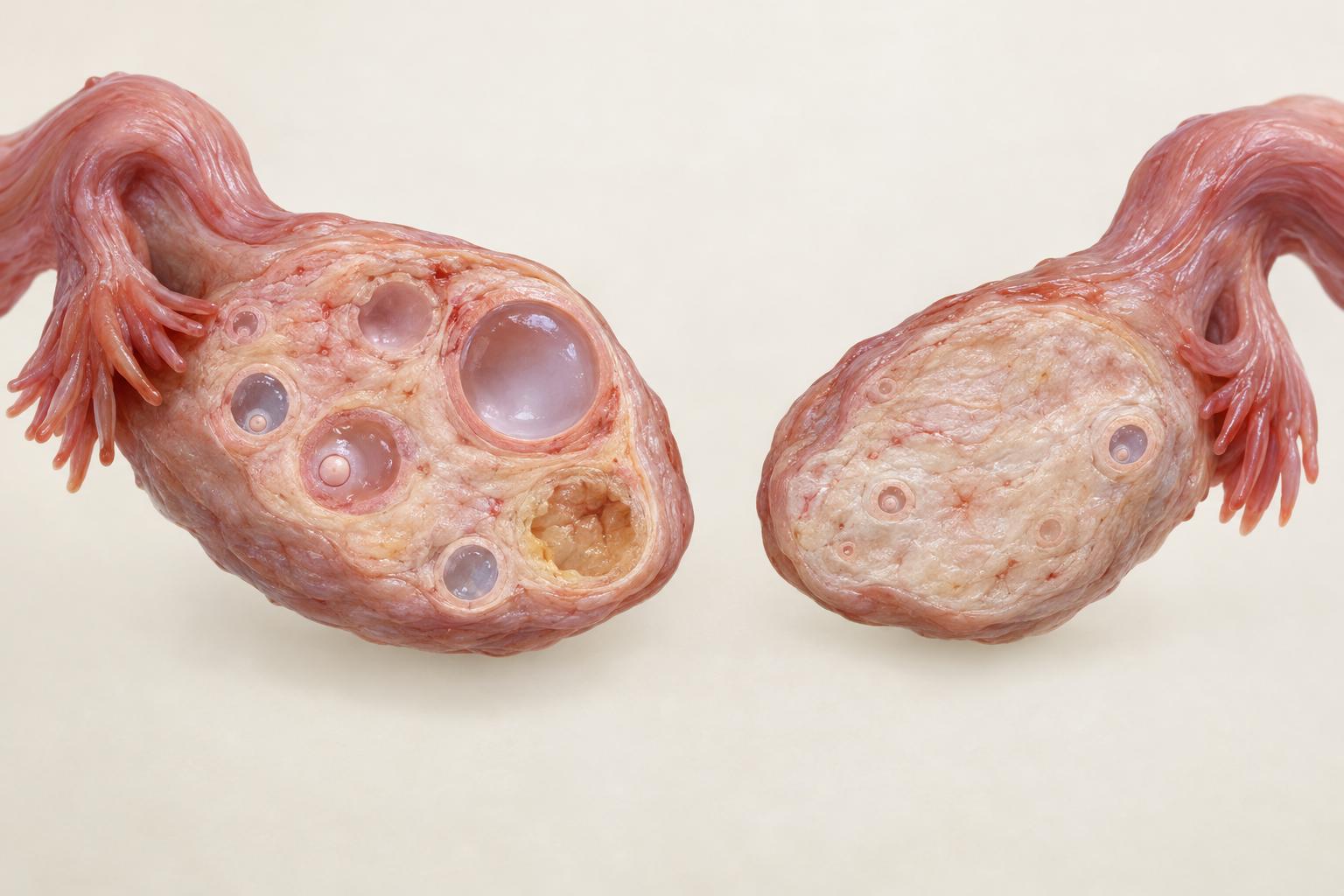
Menopause is usually part of a natural process
Menopause is not a disease, and it does not mean that anything was done wrong. For most people, it occurs as ovarian activity declines over time. Ovarian follicles—structures involved in egg maturation and hormone production—become less active. The pace and duration of this transition vary.
What changes during the transition
Ovulation may become less regular, and estrogen production usually declines. As a result, periods may change in frequency or duration before stopping. These changes do not happen overnight or follow the same pattern for everyone. Natural menopause is identified retrospectively after 12 consecutive months without a menstrual period, provided there is no other explanation. A single change in the menstrual cycle is not enough, on its own, to determine what stage a person is in.
When menopause may be induced
Menopause may occur after surgery to remove both ovaries. If only one ovary is removed, the other may continue to function, so the effect depends on the clinical circumstances. Some treatments, including certain cancer treatments, can also interrupt ovarian function; the effect may be temporary or permanent depending on the treatment and the individual case. When ovarian function is interrupted abruptly, changes may begin more quickly than during the natural transition. The cause and hormonal effects are assessed based on the person’s medical history and the treatment received.
Why the experience varies
The age at onset, duration of the transition, and presence or severity of symptoms vary from person to person. Some people have noticeable symptoms, while others have few or none. No symptom or bodily change, on its own, confirms the cause of menopause. There is no single menopausal experience, and its timing or course is not explained by any one personal behavior.
How menopause is evaluated
Age, menstrual changes, and medical history usually help guide the evaluation. For many adults with a typical presentation, diagnosis is made clinically, and routine hormone testing is not needed. If the situation is atypical, occurs at an unusual age, or involves a history of surgery or treatment, a healthcare professional may consider testing or another type of evaluation. Whether tests are needed depends on each person’s medical history.
What information may be helpful to share
If you have questions about menstrual changes, it may help to note when they began, how your periods have changed, and whether they have stopped. Also share any history of surgery or medical treatments, and mention any symptoms or concerns. An endocrinology consultation in Bogota can help interpret this information in context. This content is for educational purposes and does not replace an individual evaluation.
When to seek medical care
If symptoms persist, test results are abnormal, or you have questions about medication, arrange an individual assessment. Do not change treatment or doses without medical guidance.
Frequently asked questions
Is menopause always caused by a disease?
No. Most often, it is related to the natural decline in ovarian activity over time. Some surgeries or treatments can also interrupt ovarian function.
Does menopause occur at the same age for everyone?
No. The age at onset and the course of the transition vary. If it occurs under circumstances that raise questions, a healthcare professional can assess the individual situation.
Do I always need a hormone test to know whether I have reached menopause?
No. For many adults with a typical presentation, diagnosis is clinical, and routine hormone testing is not needed. The healthcare professional decides whether testing is needed based on medical history and the reason for the consultation.
Does this topic resonate with you?
Every case is different. Book a consultation to review your history, test results and goals with a personalized plan.
More articles about Menopause

5 min de lectura
Publicado: 4 de noviembre de 2026 · Actualizado: 4 de noviembre de 2026
What Age Did Menopause Occur in Your Family? A Useful Detail to Discuss
The approximate age when close relatives had their last menstrual period can provide context, but it does not predict when menopause will occur for an individual. Learn what information to note and how to interpret it alongside your
6 min de lectura
Publicado: 2 de noviembre de 2026 · Actualizado: 2 de noviembre de 2026
Hormone Therapy for Menopause: How to Weigh Benefits, Risks, and Alternatives
Learn which symptoms may prompt consideration of menopausal hormone therapy, how its benefits and risks are weighed, and what alternatives are available.

6 min de lectura
Publicado: 26 de octubre de 2026 · Actualizado: 26 de octubre de 2026
If You Have Surgery During Menopause: What to Coordinate With Your Care Team Before and After
A guide to preparing for planned surgery during menopause: what treatments, medications, and supplements to report, which instructions to confirm, and how to resume follow-up care. Educational information from endocrinology in

5 min de lectura
Publicado: 5 de octubre de 2026 · Actualizado: 5 de octubre de 2026
Common Mistakes When Preparing for Menopause Diagnostic Exams and How to Avoid Them
Discover the most common mistakes women make when preparing for menopause diagnostic exams and how to avoid them to ensure accurate and reliable results.

5 min de lectura
Publicado: 29 de septiembre de 2026 · Actualizado: 29 de septiembre de 2026
Essential Checkups for Early Detection of Complications in Menopause
Learn about the importance of health checkups during menopause to detect complications early.
5 min de lectura
Publicado: 27 de septiembre de 2026 · Actualizado: 27 de septiembre de 2026
Menopause: Debunking Common Misinterpretations of Symptoms
Explore common misinterpretations of menopause symptoms and how to appropriately address them.