Educational article
Hormone Therapy for Menopause: How to Weigh Benefits, Risks, and Alternatives

Educational content. It does not replace an individual medical assessment and should not be used for self-medication.

What Is Hormone Therapy for Menopause?
Menopausal hormone therapy uses hormones to relieve certain symptoms related to declining estrogen levels. It may be considered, among other reasons, when hot flashes or night sweats affect daily life. It is not necessary for everyone and is not indicated as a way to prevent chronic diseases. Potential benefits and risks are assessed on an individual basis.
Symptoms That May Prompt a Conversation
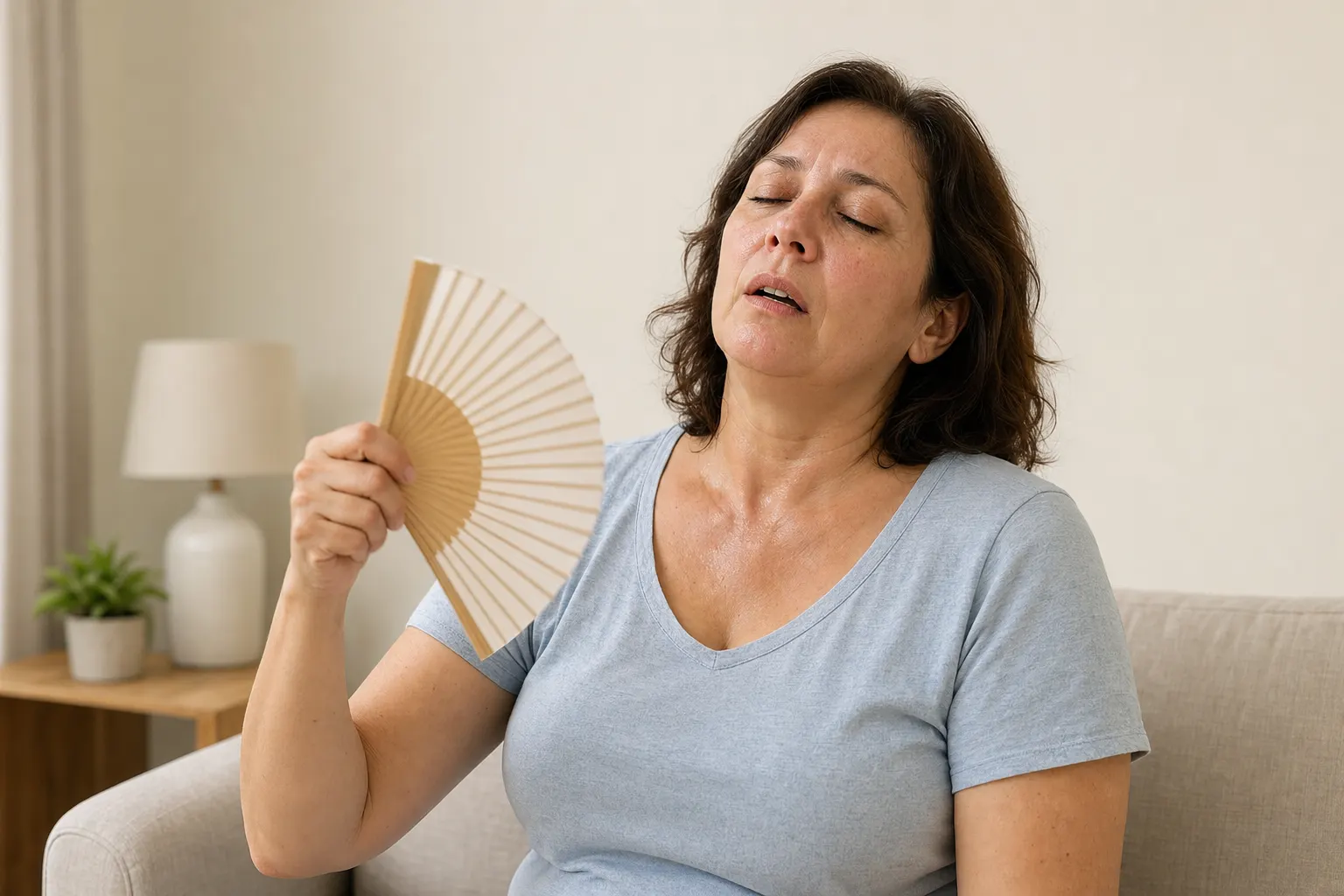
Hot flashes and night sweats can disrupt sleep or daily activities. Genitourinary symptoms may also occur, such as vaginal dryness, pain during sex, or urinary symptoms. Describing which symptoms occur, when they began, how often they happen, and how much they interfere can help guide the evaluation. A new symptom or bleeding after menopause requires evaluation; it should not be assumed to be due to menopause.
Systemic and Local Treatments Are Not the Same
Systemic therapy reaches different parts of the body and may be considered for symptoms such as hot flashes if the clinical evaluation supports that option. Local hormone treatments are aimed primarily at genitourinary symptoms. They are not interchangeable: the type of symptom and the person’s health situation help guide which options to consider, including nonhormonal options.
How to Decide Whether It May Be Appropriate
The assessment considers the type and severity of symptoms, age, time since the last menstrual period, personal medical history, medications, and preferences. Age and time since the last menstrual period help put benefits and risks in context, but do not determine the decision on their own. A therapy that is appropriate for one person may not be appropriate for another.
Medical History That Requires Careful Review
It is important to report a history of hormone-sensitive cancers, blood clots, stroke, cardiovascular or liver disease, as well as unexplained uterine bleeding. Relevant family history and any current health conditions should also be discussed. These details do not, by themselves, mean that therapy is prohibited or indicated; they must be interpreted in context.
Why Having a Uterus Matters
For people with a uterus, systemic estrogen use usually requires consideration of endometrial protection with a progestogen, because estrogen without this protection can promote changes in the uterine lining. The need for and form of protection depend on the clinical situation. Do not start, combine, or change hormones without professional guidance.
Alternatives When Hormone Therapy Is Not Chosen
If hormone therapy is not appropriate, is not desired, or you would prefer to explore other options, a health professional may consider nonhormonal treatments for symptoms such as hot flashes. For genitourinary symptoms, local measures and other alternatives can be evaluated depending on the situation. The choice depends on the symptom, medical history, preferences, and possible effects of each option.
What to Prepare for Evaluation and Follow-Up
It may be helpful to note your symptoms and when they occur, the approximate date of your last menstrual period, the medications and supplements you use, and relevant personal and family medical history. It is also useful to identify which symptoms most affect daily life and what questions you have about benefits, risks, and alternatives. If treatment is started, follow-up makes it possible to assess your response, changes in your health, and whether the treatment remains appropriate. Do not start or stop medications on your own.
Common Mistakes and When to Seek Care
Not everyone needs hormones, and therapy should not be viewed as a way to prevent chronic diseases. Do not base a decision on another person’s experience, use medications without an evaluation, or change a treatment without speaking with the person who prescribed it. Consult a health professional if symptoms affect your daily life or you want to learn about your options. Bleeding after menopause and new symptoms require evaluation; they should not automatically be attributed to menopausal changes.
When to seek medical care
If symptoms persist, test results are abnormal, or you have questions about medication, arrange an individual assessment. Do not change treatment or doses without medical guidance.
Frequently asked questions
Is hormone therapy necessary for everyone during menopause?
No. It is considered based on symptoms, medical history, age, time since the last menstrual period, and preferences. Some people choose nonhormonal alternatives or do not need treatment.
Does local hormone therapy help with hot flashes?
Local treatments are aimed primarily at genitourinary symptoms and do not necessarily serve the same purpose as systemic therapy for hot flashes. A health professional can guide the choice based on the symptom and the individual situation.
What information should I share before making a decision?
Discuss your symptoms, the approximate date of your last menstrual period, relevant personal and family medical history, and any medications or supplements you use. Also report any bleeding after menopause.
Does this topic resonate with you?
Every case is different. Book a consultation to review your history, test results and goals with a personalized plan.
More articles about Menopause

5 min de lectura
Publicado: 4 de noviembre de 2026 · Actualizado: 4 de noviembre de 2026
What Age Did Menopause Occur in Your Family? A Useful Detail to Discuss
The approximate age when close relatives had their last menstrual period can provide context, but it does not predict when menopause will occur for an individual. Learn what information to note and how to interpret it alongside your

6 min de lectura
Publicado: 26 de octubre de 2026 · Actualizado: 26 de octubre de 2026
If You Have Surgery During Menopause: What to Coordinate With Your Care Team Before and After
A guide to preparing for planned surgery during menopause: what treatments, medications, and supplements to report, which instructions to confirm, and how to resume follow-up care. Educational information from endocrinology in

5 min de lectura
Publicado: 23 de octubre de 2026 · Actualizado: 23 de octubre de 2026
Hot Flashes, Sleep Problems, or Vaginal Dryness: How to Choose Where to Start Treatment
A guide to organizing options for hot flashes, interrupted sleep, or genitourinary discomfort and preparing for an individualized clinical conversation.

5 min de lectura
Publicado: 5 de octubre de 2026 · Actualizado: 5 de octubre de 2026
Common Mistakes When Preparing for Menopause Diagnostic Exams and How to Avoid Them
Discover the most common mistakes women make when preparing for menopause diagnostic exams and how to avoid them to ensure accurate and reliable results.

5 min de lectura
Publicado: 29 de septiembre de 2026 · Actualizado: 29 de septiembre de 2026
Essential Checkups for Early Detection of Complications in Menopause
Learn about the importance of health checkups during menopause to detect complications early.
5 min de lectura
Publicado: 27 de septiembre de 2026 · Actualizado: 27 de septiembre de 2026
Menopause: Debunking Common Misinterpretations of Symptoms
Explore common misinterpretations of menopause symptoms and how to appropriately address them.