Educational article
Appointments for Cycle Changes and Hot Flashes: Making the Most of Your Visit During the Menopausal Transition

Educational content. It does not replace an individual medical assessment and should not be used for self-medication.
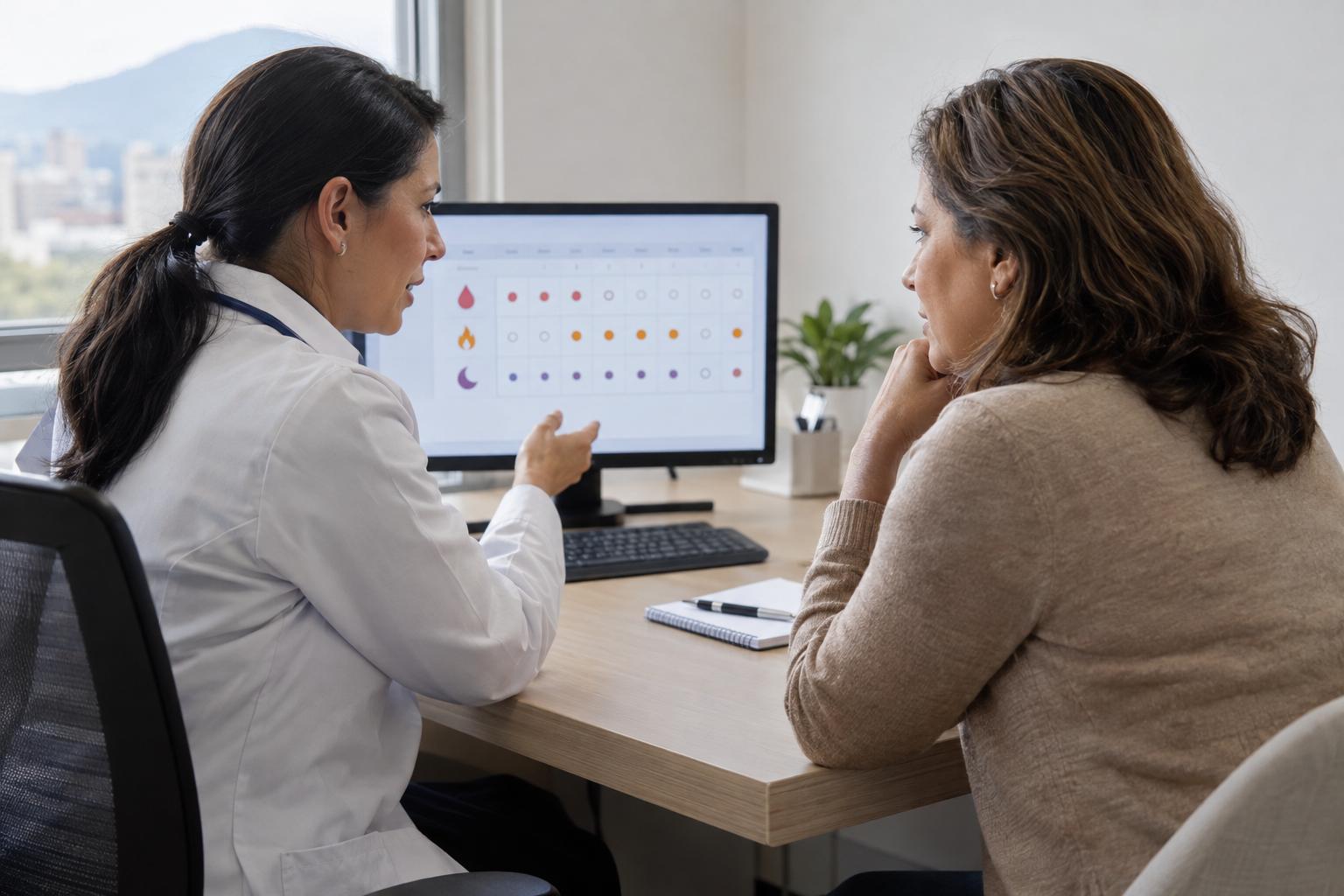
What to Prepare for Your Appointment
During the menopausal transition, also called perimenopause, menstrual cycles may change and hot flashes or sweating may occur. Before your appointment, write down what has changed, when it began, and how it affects your activities. This information can help guide the conversation, but it does not establish a diagnosis on its own.
Track Cycle Changes
Write down the start dates of each menstrual bleed and any changes you notice, such as shorter or longer cycles, intervals that differ from your usual pattern, or changes in how long bleeding lasts. If you do not remember an exact date, note that it is approximate. Also indicate when you first noticed the change.
Describe Hot Flashes and Other Symptoms
For each symptom that concerns you, note when it began, how often it occurs, and how long it usually lasts. Describe what you notice in your own words, such as a sudden wave of heat or sweating, and indicate whether it happens during the day or at night. You do not need to use medical terms.
Explain How It Affects Your Daily Life
Mention whether episodes interrupt your sleep, make it difficult to concentrate, or affect your work, mood, or usual activities. A specific example—such as waking up because of night sweats—may help explain the impact better than a list of symptoms without context.
Bring Your Medical History and Medication List
Prepare a list of the medications, supplements, and contraceptives you use, even if you do not take them every day. Include relevant medical history and recent health changes you consider important. You can bring your records on paper or on your phone; you do not need an app or a special format.
The Evaluation Is Tailored to Each Person
The interpretation of changes takes age, medical history, and symptom patterns into account. Hot flashes or irregular cycles do not, by themselves, confirm the menopausal transition; the healthcare professional may consider other causes and decide whether an evaluation or any testing is needed. Not everyone needs the same evaluation.
Questions to Discuss at Your Appointment
You can ask which aspects of your history help explain the changes, what other causes should be considered, what information you should continue tracking, and when it would be useful to follow up. If you do not understand an explanation, ask for the next steps to be clarified in plain language.
When to Ask for Guidance
Discuss changes with a healthcare professional if they concern you, interfere with your activities, or are difficult to interpret. Also seek advice if bleeding is very heavy, occurs after 12 months without a menstrual period, or follows a new pattern that worries you. Do not change medications, contraceptives, or supplements on your own.
When to seek medical care
If symptoms persist, test results are abnormal, or you have questions about medication, arrange an individual assessment. Do not change treatment or doses without medical guidance.
Frequently asked questions
Do hot flashes and cycle changes confirm perimenopause?
Not on their own. The evaluation considers the symptom pattern, age, and medical history, and may take other explanations into account.
What should I do if I do not remember the exact dates of my cycles?
Bring the dates you do remember and note which ones are approximate. From now on, you can write down the start of bleeding and any symptoms; you do not need a special format.
Should I change my treatment before my appointment?
Do not make changes on your own. Bring a list of your medications, supplements, and contraceptives to discuss during the evaluation.
Does this topic resonate with you?
Every case is different. Book a consultation to review your history, test results and goals with a personalized plan.
More articles about Menopause

5 min de lectura
Publicado: 4 de noviembre de 2026 · Actualizado: 4 de noviembre de 2026
What Age Did Menopause Occur in Your Family? A Useful Detail to Discuss
The approximate age when close relatives had their last menstrual period can provide context, but it does not predict when menopause will occur for an individual. Learn what information to note and how to interpret it alongside your

6 min de lectura
Publicado: 2 de noviembre de 2026 · Actualizado: 2 de noviembre de 2026
Hormone Therapy for Menopause: How to Weigh Benefits, Risks, and Alternatives
Learn which symptoms may prompt consideration of menopausal hormone therapy, how its benefits and risks are weighed, and what alternatives are available.

6 min de lectura
Publicado: 26 de octubre de 2026 · Actualizado: 26 de octubre de 2026
If You Have Surgery During Menopause: What to Coordinate With Your Care Team Before and After
A guide to preparing for planned surgery during menopause: what treatments, medications, and supplements to report, which instructions to confirm, and how to resume follow-up care. Educational information from endocrinology in

5 min de lectura
Publicado: 5 de octubre de 2026 · Actualizado: 5 de octubre de 2026
Common Mistakes When Preparing for Menopause Diagnostic Exams and How to Avoid Them
Discover the most common mistakes women make when preparing for menopause diagnostic exams and how to avoid them to ensure accurate and reliable results.

5 min de lectura
Publicado: 29 de septiembre de 2026 · Actualizado: 29 de septiembre de 2026
Essential Checkups for Early Detection of Complications in Menopause
Learn about the importance of health checkups during menopause to detect complications early.

5 min de lectura
Publicado: 27 de septiembre de 2026 · Actualizado: 27 de septiembre de 2026
Menopause: Debunking Common Misinterpretations of Symptoms
Explore common misinterpretations of menopause symptoms and how to appropriately address them.