Educational article
Osteoporosis Treatment: How to Measure Progress Beyond Bone Density Scans

Educational content. It does not replace an individual medical assessment and should not be used for self-medication.
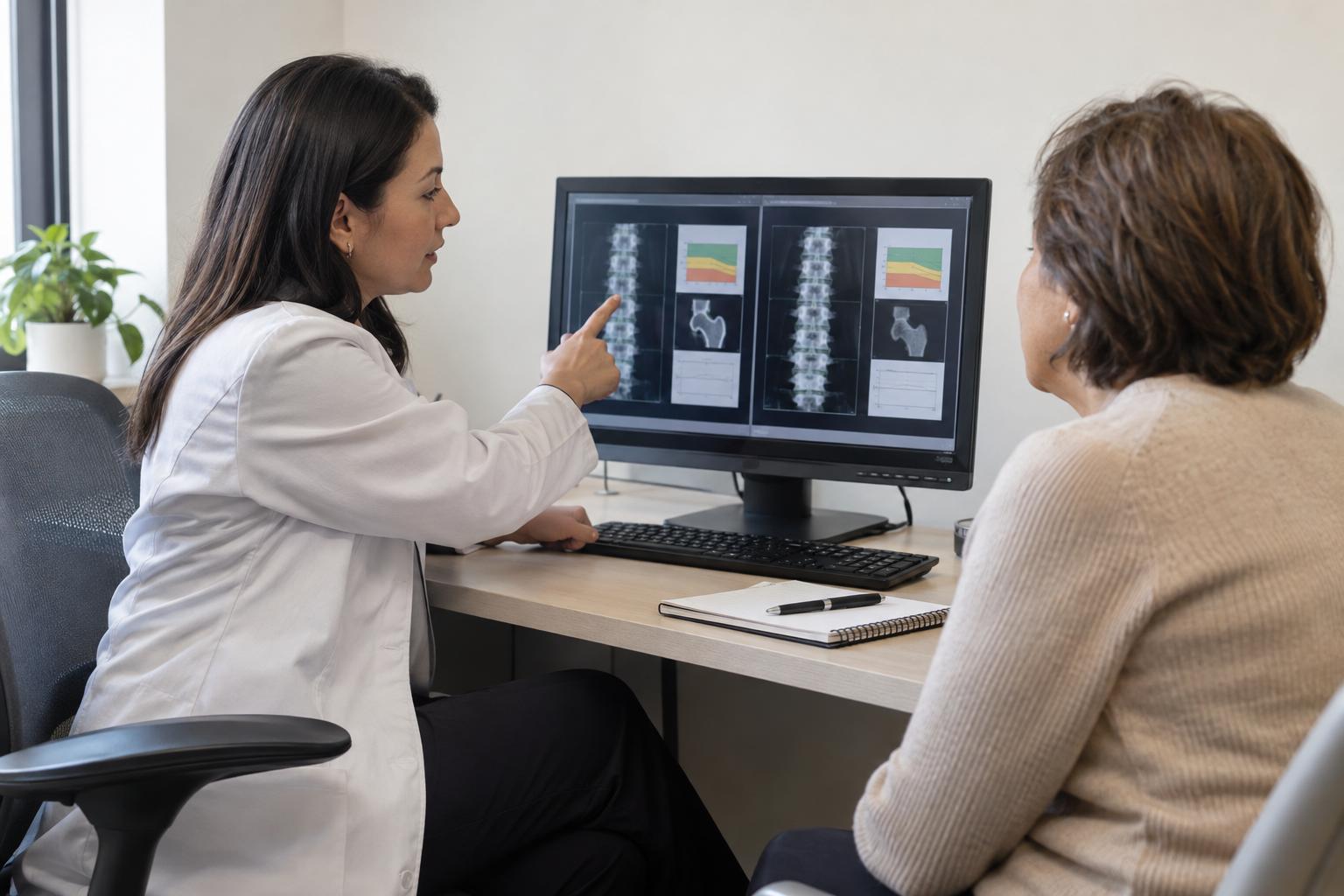
What it means for treatment to be working
Osteoporosis treatment aims to reduce the risk of fractures, but it does not eliminate that risk completely. Because treatment often does not produce a noticeable feeling, not noticing changes in daily life cannot, by itself, tell you whether it is working. Assessment combines medical history, clinical progress, adherence to the plan, and bone density scans when appropriate.
1. Clarify which goal is being monitored
Ask what the main goal is in your case, such as reducing the risk of a first fracture or of additional fractures. The goal depends on your history, clinical assessment, and the plan agreed upon with your health care team.
2. Report fractures and other relevant changes
Tell your health care team if you have had a fracture since starting treatment, when it occurred, and how it happened, if you know. Also report significant changes in your health and any other medications or treatments. A fracture during treatment needs to be assessed, but it does not automatically mean the medication has failed: your health care professional will review the circumstances and your progress.
3. Review how you have followed the prescribed plan
Tell your health care team whether you have been able to use the treatment as directed and whether you have had difficulties, unwanted effects, or interruptions. Do not change or stop the medication on your own. If the plan is difficult to follow, discuss it with your health care professional so they can consider options appropriate for your situation.
4. Understand what a bone density scan can tell you
A bone density scan measures bone mineral density and may help assess changes over time when repeated at the recommended time. It does not directly measure how you feel or, by itself, show that the risk of fracture has disappeared. The result is interpreted together with your fracture history, treatment, and other clinical information.
5. Ask for context when interpreting changes
A small difference between measurements does not always represent a clinically important change. Its interpretation depends, among other things, on which tests are being compared, the time between them, and each person's circumstances. There is no single interval for repeating a bone density scan: your treating team decides when it may provide useful information.
6. Distinguish fracture prevention from everyday symptoms
Fracture prevention is a clinical goal and does not usually produce a symptom you can feel. Therefore, the absence of pain, fatigue, or other changes does not, by itself, confirm success or lack of response. A new or persistent symptom may need to be evaluated for its own reasons, but it is not a direct measure of how osteoporosis is responding to treatment.
7. Prepare for your follow-up conversation
Bring a list of your medications and treatments, previous bone density scan reports if available, and the dates of any fractures or interruptions to the plan. Ask what information will be used to assess your response, what the results mean in your case, and when the next follow-up would make sense. Your health care professional is responsible for interpreting your individual results.
Agree on next steps
Follow-up may show that the preventive plan is being carried out appropriately even if you do not notice an improvement. Agree with your health care team on how your treatment, fracture history, clinical progress, and bone density scans will be reviewed when appropriate. This content is for educational purposes and does not replace a medical consultation.
When to seek medical care
If symptoms persist, test results are abnormal, or you have questions about medication, arrange an individual assessment. Do not change treatment or doses without medical guidance.
Frequently asked questions
If I do not feel any change, does that mean the treatment is not working?
Not necessarily. Treatment is primarily intended to reduce the risk of fracture, a benefit that is not always noticeable in daily life. Response is assessed using several pieces of clinical information.
Does having a fracture during treatment mean the medication failed?
Not automatically. Tell your health care team about the fracture so they can review its characteristics and the treatment context. Do not stop or change the medication without professional guidance.
Does a small change in my bone density scan confirm that I am better or worse?
Not by itself. Your health care professional interprets the change by considering which tests are being compared, the time between them, and your clinical situation. The timing of a repeat test is decided individually.
Does this topic resonate with you?
Every case is different. Book a consultation to review your history, test results and goals with a personalized plan.
More articles about Osteoporosis

5 min de lectura
Publicado: 8 de noviembre de 2026 · Actualizado: 8 de noviembre de 2026
Moving with Osteoporosis: How to Care for Your Balance and Strength While Staying Active
Physical activity can support strength and mobility with osteoporosis. Learn about its components, how to start gradually, and what to discuss when adapting movement to your needs.

5 min de lectura
Publicado: 2 de noviembre de 2026 · Actualizado: 2 de noviembre de 2026
Osteoporosis and Travel: Plan Your Checkups and Care Before You Leave
Review what to coordinate before traveling if you have osteoporosis: upcoming checkups, prescribed medications, instructions for the journey, and what to do if you fall.

5 min de lectura
Publicado: 30 de octubre de 2026 · Actualizado: 30 de octubre de 2026
From Fragile Bones to Fracture: What Predisposes You and What Can Trigger It
A fall can precipitate a fracture, but it usually does not explain preexisting bone fragility on its own. Learn about factors that may predispose someone to osteoporosis and how bone health is evaluated after a fracture.

6 min de lectura
Publicado: 18 de octubre de 2026 · Actualizado: 18 de octubre de 2026
Osteoporosis and Other Health Conditions: How Treatment Choices Are Adjusted
Kidney function, certain digestive or cardiovascular problems, and other medications can influence options for treating osteoporosis. Learn which medical history and treatments to share, and what questions to ask.
5 min de lectura
Publicado: 2 de octubre de 2026 · Actualizado: 2 de octubre de 2026
Key Factors for Diagnosing Osteoporosis: Personal History and Essential Data
Analyzes the personal history and essential data for an accurate diagnosis of osteoporosis in Bogotá.
5 min de lectura
Publicado: 28 de septiembre de 2026 · Actualizado: 28 de septiembre de 2026
Osteoporosis: Signs You Should Watch For Before Consulting a Specialist
Discover the signs and symptoms of osteoporosis you should watch for to seek medical help in time.