Educational article
Low Energy or Sex Drive: How a Possible Male Hormone Disorder Is Evaluated

Educational content. It does not replace an individual medical assessment and should not be used for self-medication.
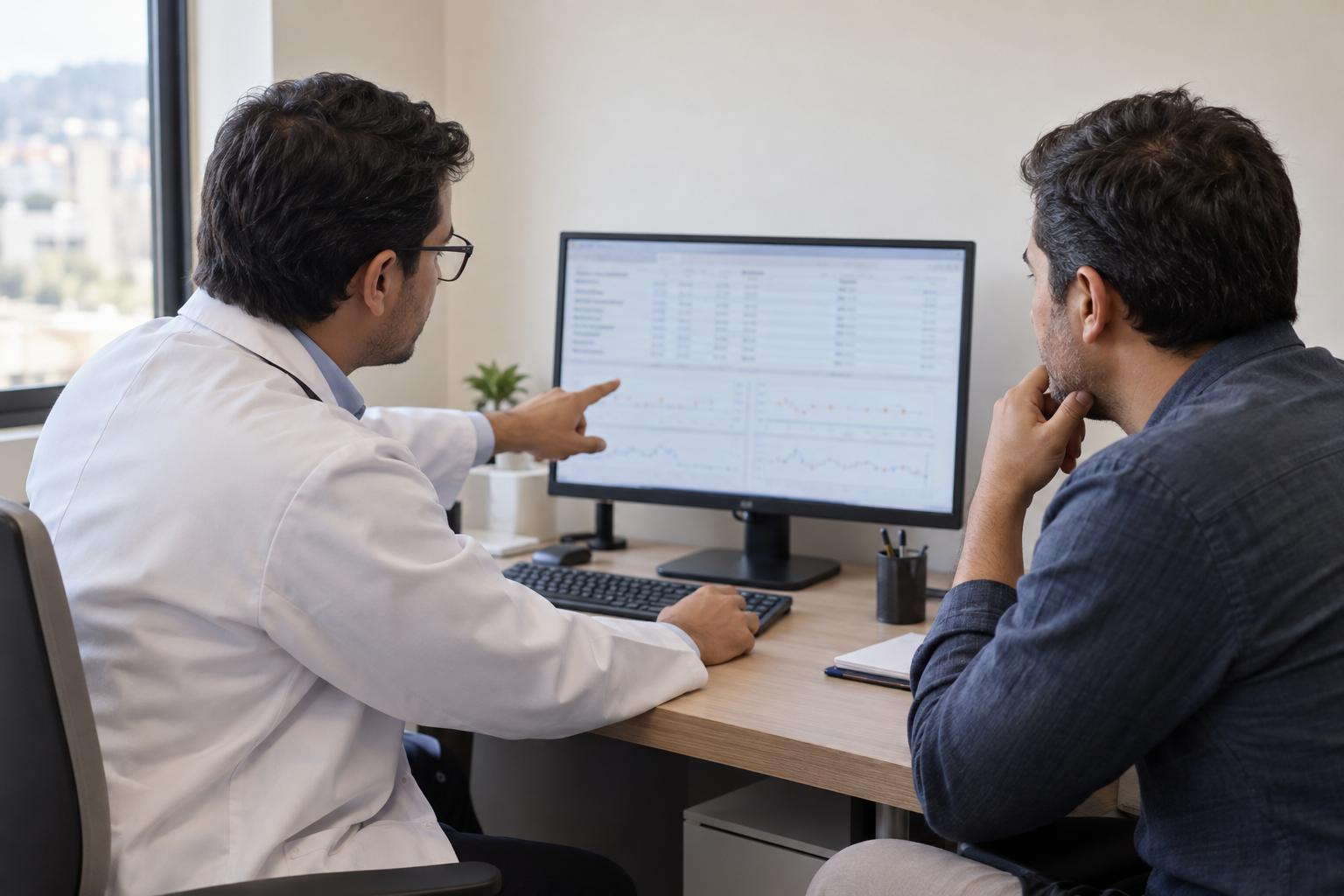
What it means to evaluate possible low testosterone
Testosterone plays a role in sexual health and other aspects of the body. If an adult notices persistent changes in sex drive, erections, or energy, they may wonder whether their testosterone levels are low. This is one possibility that can be evaluated, but symptoms alone do not identify the cause.
Symptoms that may prompt an evaluation
Some men seek care because of reduced interest in sex, changes in erectile function, persistent fatigue, or a decrease in strength or muscle mass. They may also report changes in mood or concentration. These symptoms vary from person to person and can have more than one cause; having them or reaching a certain age does not prove that a hormone disorder is present.
Other possible causes
Insufficient or poor-quality sleep, stress, and mental health can affect energy and sex drive. Medical conditions, some medications, and other health factors may also play a role. For this reason, it is best to evaluate the overall symptoms and circumstances rather than automatically attributing any change to hormones.
How the clinical evaluation is organized
The health professional may ask when the changes began, how long they have lasted, and how they affect daily life. They will also review, as appropriate, medical history, medications, sleep, and other symptoms. If relevant, they will discuss reproductive goals, since these may influence management decisions. The evaluation is tailored to each person; it does not require ordering tests indiscriminately.
How results are interpreted
The health professional decides whether measuring testosterone is appropriate and considers the symptoms, timing, and conditions of the blood draw when interpreting the result. A single measurement does not establish a diagnosis on its own. If the result does not fit the clinical picture, it may need to be confirmed or the evaluation expanded.
What to avoid
It is not advisable to automatically attribute fatigue to low testosterone or interpret a result without context. Avoid starting testosterone or supplements on your own: they may not be appropriate for your situation. If you want to have children, tell your health professional, since external testosterone can affect sperm production.
When to make an appointment
Consider talking with a health professional if changes in sex drive, erections, or energy persist, concern you, or affect your daily life. Bringing a list of symptoms and medications can help guide the conversation. An evaluation can consider hormonal and nonhormonal causes and determine whether testing or follow-up is needed.
When to seek medical care
If symptoms persist, test results are abnormal, or you have questions about medication, arrange an individual assessment. Do not change treatment or doses without medical guidance.
Frequently asked questions
Does fatigue mean I have low testosterone?
Not necessarily. Fatigue can be related to sleep, mental health, medical conditions, medications, or other factors. It is interpreted alongside your medical history and other symptoms.
Does a testosterone test confirm the diagnosis?
A single measurement does not by itself confirm a hormone disorder. The health professional determines whether testing is appropriate and how to interpret the result based on the conditions of the blood draw and the clinical picture.
Is it safe to try supplements or testosterone before consulting a health professional?
It is not recommended to start testosterone or supplements on your own. Consult a health professional, especially if you want to have children, because external testosterone can affect sperm production.
Does this topic resonate with you?
Every case is different. Book a consultation to review your history, test results and goals with a personalized plan.
More articles about Male hormonal health

5 min de lectura
Publicado: 30 de octubre de 2026 · Actualizado: 30 de octubre de 2026
Low Testosterone: What Medical History Makes a Consultation Useful, Even Without Clear Symptoms
Sleep apnea, certain medications, and some testicular conditions or treatments may be relevant when evaluating testosterone. Learn what medical history to mention and why none of it confirms a diagnosis or

5 min de lectura
Publicado: 26 de octubre de 2026 · Actualizado: 26 de octubre de 2026
Planning to Have Children? What to Discuss Before Using Testosterone
Testosterone given from outside the body can reduce sperm production. Learn what to discuss with your healthcare professional if you want to have children now or in the future.

5 min de lectura
Publicado: 24 de octubre de 2026 · Actualizado: 24 de octubre de 2026
One Bad Week Does Not Reveal Your Hormones: How to Tell a Temporary Variation from a Persistent Change
Sleep, energy, and performance can vary for many reasons. Learn how to observe changes over time without assuming they are caused by a hormonal problem, and when to seek an evaluation.

5 min de lectura
Publicado: 24 de octubre de 2026 · Actualizado: 24 de octubre de 2026
Shift Work and Men’s Hormone Testing: Coordinate Timing and Results
If you work shifts, learn what information about your work schedule and rest may be useful when coordinating hormone testing, and how to ask about preparation and follow-up.

5 min de lectura
Publicado: 17 de octubre de 2026 · Actualizado: 17 de octubre de 2026
After a Hospitalization: What to Review Before Resuming Hormonal Follow-Up
What to review in your discharge summary, medications, and test results before resuming follow-up for male hormone therapy.

5 min de lectura
Publicado: 9 de octubre de 2026 · Actualizado: 9 de octubre de 2026
Using Testosterone on Your Own: Symptoms After Use That Require Prompt Attention
Recognize symptoms such as chest pain, significant difficulty breathing, or sudden weakness that require emergency care during or after testosterone or anabolic steroid use.