Educational article
Osteoporosis and Changing Work Schedules: Ideas for Safely Incorporating Movement at Work

Educational content. It does not replace an individual medical assessment and should not be used for self-medication.

Does having an active job count as exercise?
Not necessarily. Walking between tasks, standing, or moving objects are part of work-related activity, but they do not always amount to a planned exercise program. At the same time, a physically demanding workday may leave little room to add more activity. It is helpful to consider your tasks, abilities, and healthcare team’s recommendations together.
If I spend many hours sitting, should I make up for it with an intense workout?
No. Spending many hours sitting does not mean you should do an intense workout at the end of your shift. If your job and conditions allow, changing position or taking a brief walk may interrupt prolonged periods in the same position. The right option depends, among other factors, on your balance, mobility, pain, fracture history, and the day’s tasks.
How can I adapt breaks to a changing schedule?
Instead of relying on a set time, you can link a break to recurring moments during your shift: after finishing a task, changing workstations, or taking an authorized break. Depending on the space and safety conditions, you could change position, stand up, or walk a short distance. With rotating shifts, you do not need to follow a rigid schedule; breaks should fit the opportunities available.
What should I keep in mind during a break?
Consider the conditions at your workplace, such as available space, the condition of the floor, and workplace safety rules. Choose comfortable movements that do not interfere with your tasks. If changing position or walking makes you feel unsteady or causes discomfort, stop and ask for guidance before trying again. Breaks do not have to become an exercise routine.
Is planned exercise the same as doing work tasks?
No. Work tasks may involve sustained postures, repetitive movements, lifting, or work paces that were not chosen as part of an exercise program. Planned exercise is selected based on personal goals and circumstances. You do not need to turn every task into a workout or add exertion on your own; ask what activity is appropriate for your situation.
What if I have had a fracture, have pain, or have limitations?
A history of fracture, pain, and balance difficulties can affect which movements are appropriate. Before making a significant change to your activity or trying new exercises, ask for individualized guidance. If you have severe or sudden pain, seek an evaluation rather than trying to address it by increasing or changing your movement. Your healthcare team can provide guidance or recommend physical therapy based on your needs.
Do breaks replace treatment or checkups?
No. Breaks may help you vary your position during the workday, but they are not a treatment for osteoporosis and do not replace prescribed medications, checkups, or individualized recommendations. Do not change your treatment or follow-up schedule because you have added breaks. If your schedule makes it difficult to follow the agreed plan, discuss this with your healthcare team.
A practical way to get started
Notice which moments during your shift allow you to change position without rushing or compromising safety. Choose a brief, comfortable option and see whether it fits your different workdays. If you are unsure which movements are appropriate, an activity causes discomfort, or your physical tasks vary considerably, ask your healthcare team or a physical therapist for guidance. The goal is to find an option that works for your situation, not to follow a one-size-fits-all routine.
When to seek medical care
If symptoms persist, test results are abnormal, or you have questions about medication, arrange an individual assessment. Do not change treatment or doses without medical guidance.
Frequently asked questions
Should I take breaks at the same frequency during every shift?
Not necessarily. You can adapt them to the breaks available and the tasks of each workday. If you have questions about what is appropriate for you, ask for individualized guidance.
Does walking at work count as exercise for osteoporosis?
Walking is a form of activity, but it does not always amount to a planned exercise program. Work-related activity also does not replace treatment or checkups; ask which options are appropriate for your abilities and history.
Who should I ask if I am unsure which movements are appropriate?
You can talk with your healthcare team. Depending on your situation, an evaluation by a physical therapist may also be helpful, especially if you have a history of fracture, pain, or limitations.
Does this topic resonate with you?
Every case is different. Book a consultation to review your history, test results and goals with a personalized plan.
More articles about Osteoporosis

5 min de lectura
Publicado: 8 de noviembre de 2026 · Actualizado: 8 de noviembre de 2026
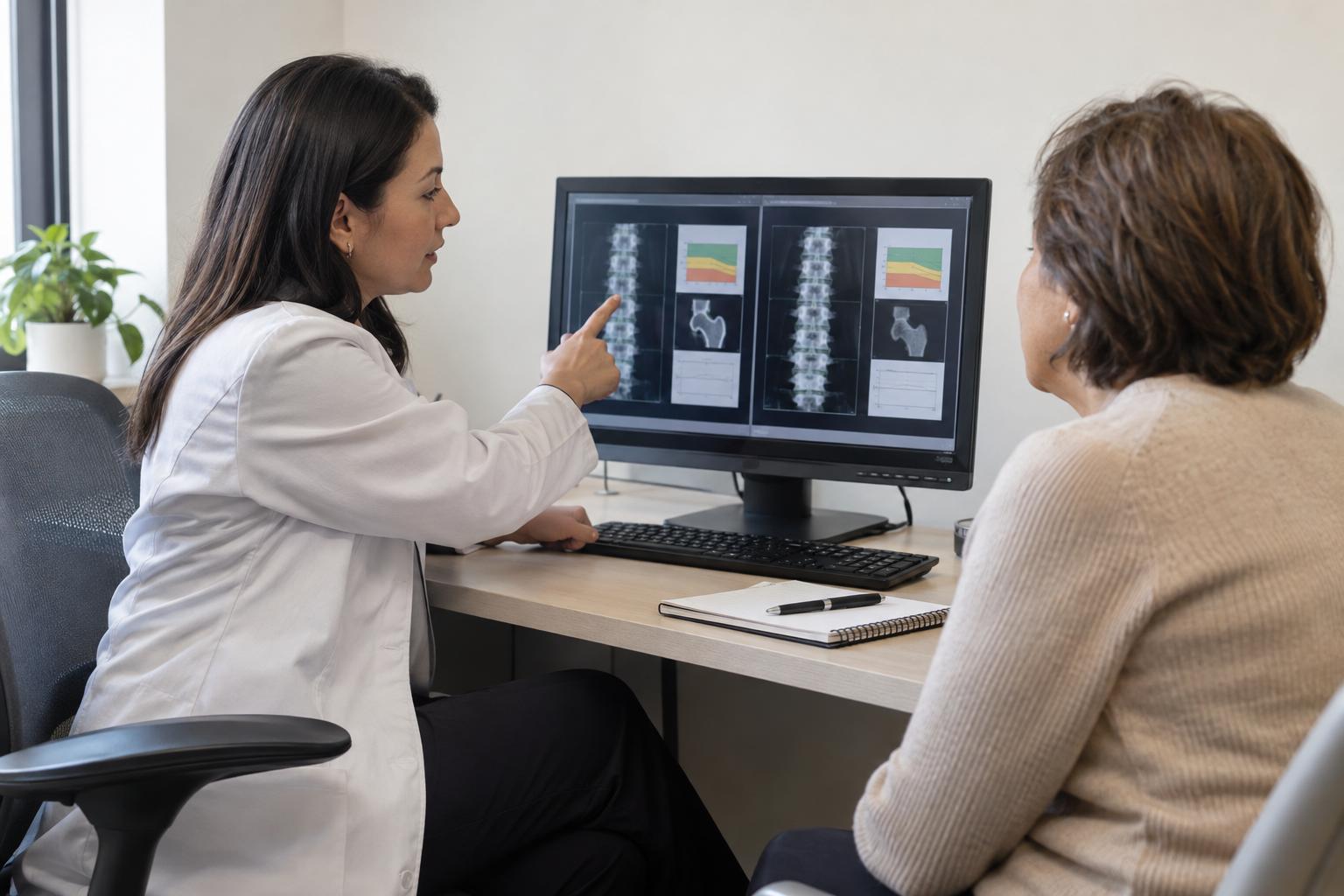
Moving with Osteoporosis: How to Care for Your Balance and Strength While Staying Active
Physical activity can support strength and mobility with osteoporosis. Learn about its components, how to start gradually, and what to discuss when adapting movement to your needs.
5 min de lectura
Publicado: 6 de noviembre de 2026 · Actualizado: 6 de noviembre de 2026
Osteoporosis Treatment: How to Measure Progress Beyond Bone Density Scans
The response to osteoporosis treatment is not usually something you can feel day to day. Learn how fractures, adherence to the treatment plan, and bone density scans are interpreted to assess risk and decide on next steps.

5 min de lectura
Publicado: 2 de noviembre de 2026 · Actualizado: 2 de noviembre de 2026
Osteoporosis and Travel: Plan Your Checkups and Care Before You Leave
Review what to coordinate before traveling if you have osteoporosis: upcoming checkups, prescribed medications, instructions for the journey, and what to do if you fall.

5 min de lectura
Publicado: 30 de octubre de 2026 · Actualizado: 30 de octubre de 2026
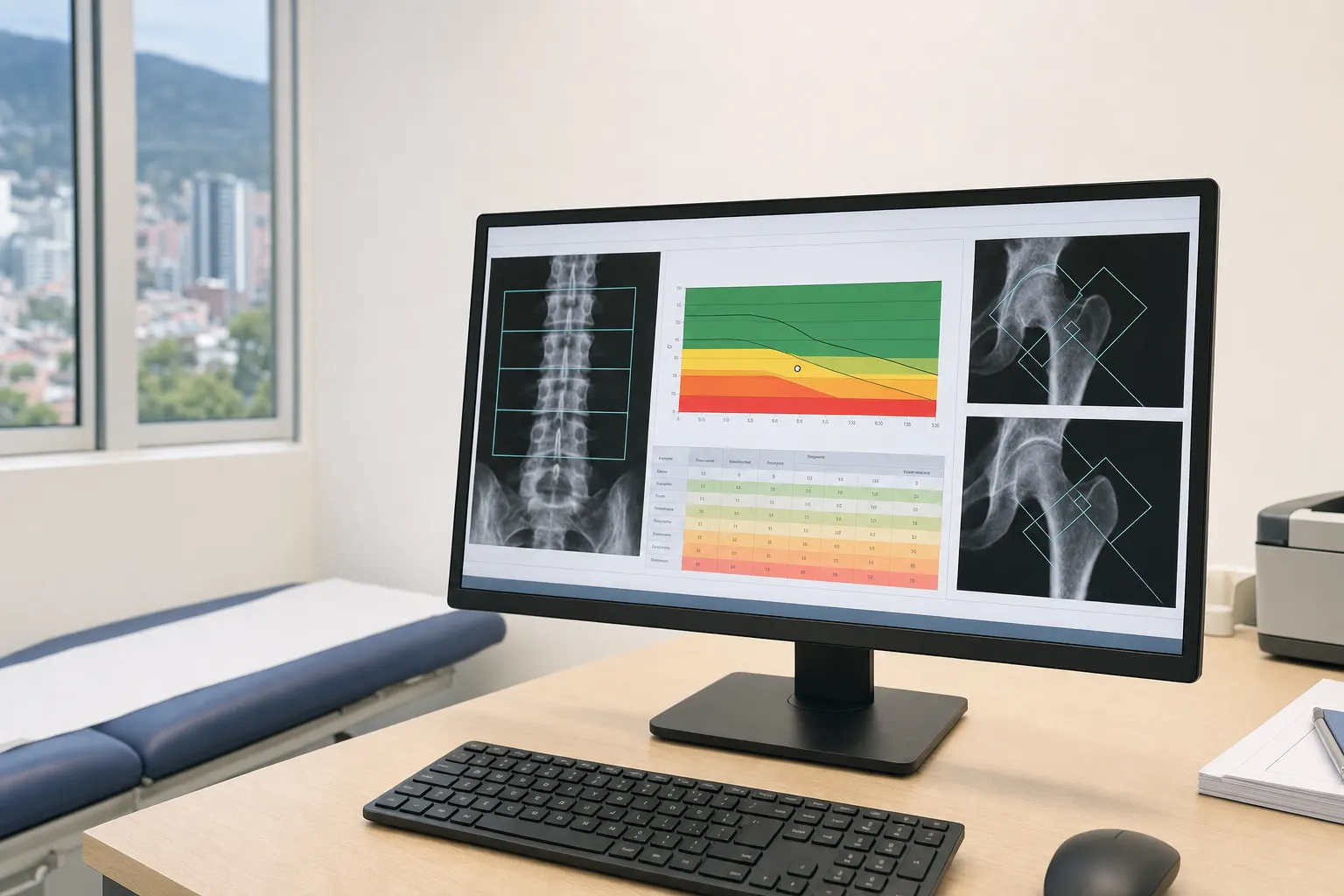
From Fragile Bones to Fracture: What Predisposes You and What Can Trigger It
A fall can precipitate a fracture, but it usually does not explain preexisting bone fragility on its own. Learn about factors that may predispose someone to osteoporosis and how bone health is evaluated after a fracture.
5 min de lectura
Publicado: 2 de octubre de 2026 · Actualizado: 2 de octubre de 2026
Key Factors for Diagnosing Osteoporosis: Personal History and Essential Data
Analyzes the personal history and essential data for an accurate diagnosis of osteoporosis in Bogotá.

5 min de lectura
Publicado: 28 de septiembre de 2026 · Actualizado: 28 de septiembre de 2026
Osteoporosis: Signs You Should Watch For Before Consulting a Specialist
Discover the signs and symptoms of osteoporosis you should watch for to seek medical help in time.