Educational article
From Consultation to Imaging: How a Pituitary Evaluation Is Organized

Educational content. It does not replace an individual medical assessment and should not be used for self-medication.

What does a pituitary evaluation involve?
The pituitary gland produces hormones that help regulate other glands and functions in the body. Evaluating a possible disorder does not mean ordering every available test at once. Symptoms, medical history, physical examination, and tests that can answer specific clinical questions are considered together. The evaluation may include hormone tests and, in some cases, imaging of the pituitary region. Which tests are used and in what order depend on the findings; there is no single sequence that is the same for everyone.
What may prompt an evaluation?
An evaluation may be considered when there are persistent changes that suggest a hormonal disorder, symptoms that raise the possibility of a lesion in the pituitary region, or an incidental finding on imaging ordered for another reason. Signs and symptoms depend on which hormonal function is involved and are not unique to pituitary disease. A single symptom does not confirm the source of a problem. The clinician considers how long it has been present, how it has changed over time, whether it occurs with other findings, and the person’s health conditions and treatments.
Medical history and physical examination
During the evaluation, the clinician reviews symptoms and when they began, personal and family medical history, previous tests, and any medications or supplements the person uses. Some treatments may affect symptoms or the interpretation of certain test results. It is important to mention them and not stop or change them without guidance from a healthcare professional. The physical examination is guided by the medical history. This step helps determine which questions the tests should answer and how to interpret their results in context.
Hormone tests based on the function being evaluated
Because the pituitary gland is involved in several hormonal functions, tests are selected based on symptoms, medical history, and the function that needs to be investigated. In some cases, pituitary hormones and the hormones produced by the glands they act on are evaluated; in other cases, additional tests or a complementary assessment may be needed. Not all tests are necessarily ordered at the same time. Results are interpreted together and may help guide what to evaluate next; a single value is usually not enough to explain the clinical picture.
When is imaging considered?
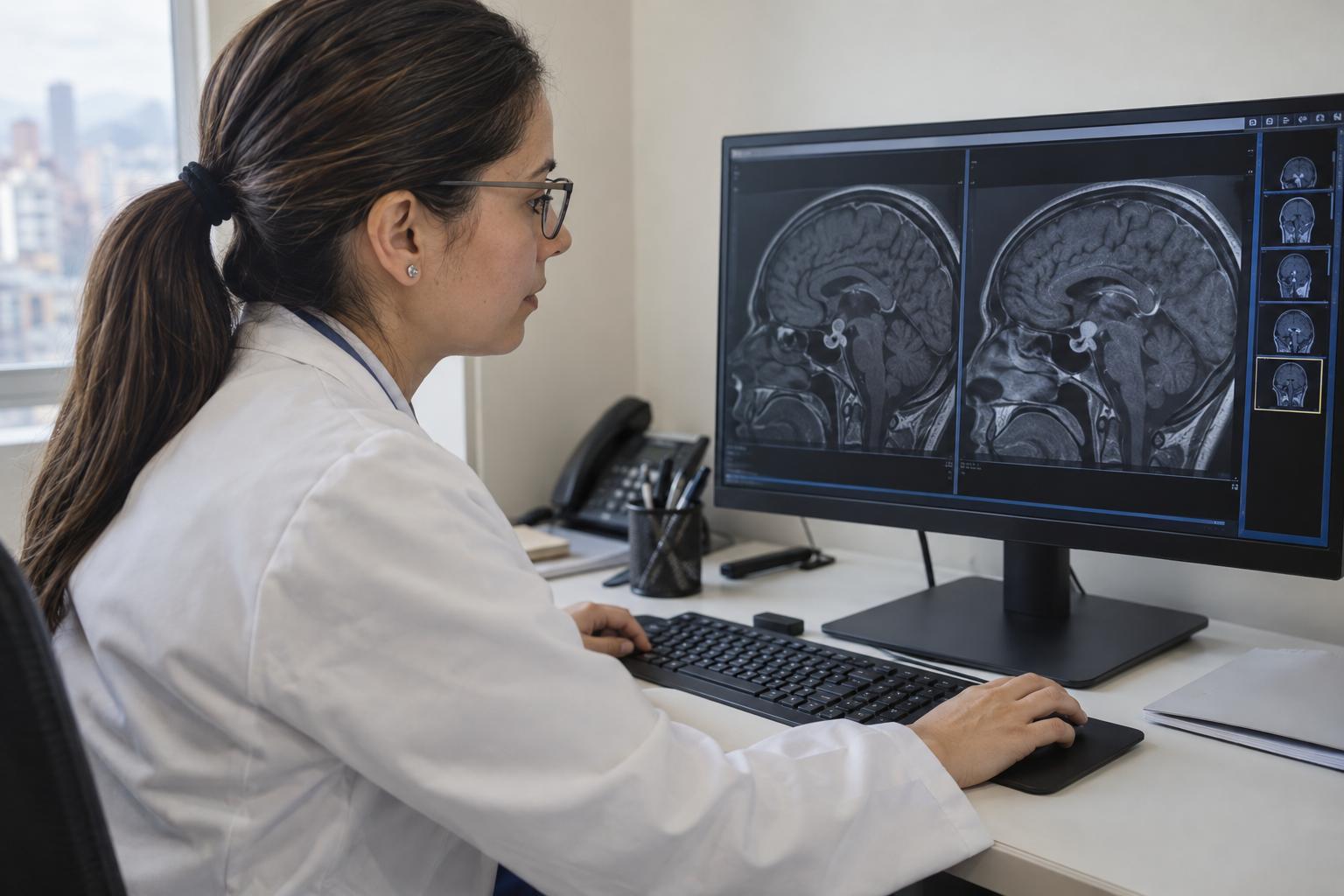
An MRI of the pituitary region may be considered when the medical history and hormone test results make it appropriate to examine the anatomy of that area. The decision depends on the findings and the clinical question; a suspicion does not mean that everyone needs an MRI. Imaging provides anatomical information, while tests help assess hormonal function. An MRI does not replace hormone testing, and an imaging finding must be interpreted together with the medical history.
An evaluation that may change based on the findings
There is no single protocol for everyone. Sometimes the medical history and initial results help focus the evaluation; in other situations, additional tests, a review of previous studies, or imaging may be needed. Timing also varies depending on the findings and clinical urgency. If a situation requiring priority attention is identified, the treating team may adjust the order of the evaluation. Urgency is determined during the clinical assessment, not solely by a word or an out-of-range result in a report.
Common mistakes when looking for an explanation
A common mistake is assuming that a single test confirms or rules out pituitary disease. It can also be misleading to compare results without considering why the test was ordered, the person’s medications and medical history, and the other findings. An MRI is not always needed, and imaging alone does not necessarily explain every symptom. Before drawing conclusions, it is helpful to understand what question each test is intended to answer and how it fits with the clinical evaluation.
How to prepare for the evaluation
If symptoms of concern persist, a previous test or imaging study has prompted concern, or there are questions about next steps, it may be helpful to speak with a healthcare professional. Bringing previous reports and results, along with a list of medications and relevant medical history, makes the review easier and can help avoid unnecessary repeat testing. In Colombia, an endocrinology consultation may help organize tests performed by different services and determine whether additional information is needed. The specific evaluation pathway is determined with the treating professional.
When to seek medical care
If symptoms persist, test results are abnormal, or you have questions about medication, arrange an individual assessment. Do not change treatment or doses without medical guidance.
Frequently asked questions
Does everyone with a suspected pituitary disorder need an MRI?
Not necessarily. An MRI is considered based on symptoms, medical history, examination, and hormone test results. Whether it is appropriate depends on the clinical question and each person’s circumstances.
Does an MRI replace hormone tests?
No. An MRI shows anatomical features of the pituitary region, while hormone tests help assess hormonal function. This information is considered together with the medical history and examination.
Why might some tests be ordered first and others later?
Each test is intended to answer a specific question. Initial findings help determine which studies to select next, and the order may change depending on how the situation evolves and the clinical urgency.
Does this topic resonate with you?
Every case is different. Book a consultation to review your history, test results and goals with a personalized plan.
More articles about Pituitary health

6 min de lectura
Publicado: 12 de noviembre de 2026 · Actualizado: 12 de noviembre de 2026
Traveling with a Pituitary Disorder: Medications, Schedules, and Fasting
How to plan medications, time-zone changes, fasting, and follow-up care if you have a pituitary disorder. An educational guide for people in Bogotá and Colombia; discuss specific instructions with your medical team.

6 min de lectura
Publicado: 11 de noviembre de 2026 · Actualizado: 11 de noviembre de 2026
First Review of a Pituitary Lesion: Documents and Questions to Bring
How to organize reports, images, available results, and medical history for your first review of a pituitary lesion, and what questions to ask about the evaluation and next steps.
5 min de lectura
Publicado: 11 de noviembre de 2026 · Actualizado: 11 de noviembre de 2026
Not Every Pituitary Lesion Needs Immediate Treatment: When Monitoring May Be Considered
Learn which factors your care team may consider when deciding whether a pituitary lesion needs immediate treatment or planned follow-up.

5 min de lectura
Publicado: 25 de octubre de 2026 · Actualizado: 25 de octubre de 2026
Is It the Pituitary or Something Else? Factors That Can Resemble Hormonal Symptoms
Fatigue and changes in sleep and appetite can have many explanations and do not, by themselves, identify a pituitary problem. Learn what information to track and when to seek medical evaluation.

6 min de lectura
Publicado: 23 de octubre de 2026 · Actualizado: 23 de octubre de 2026
Why the Pituitary Gland Can Be Affected: Predisposition, Triggers, and Confirmed Causes
Learn the difference between predisposition, possible associated factors, and medical causes of a pituitary disorder, and why its evaluation depends on the hormone affected.

6 min de lectura
Publicado: 17 de octubre de 2026 · Actualizado: 17 de octubre de 2026
After Pituitary Surgery: Home Care and Safe Recovery
General guidance for recovery at home after transsphenoidal pituitary surgery, including nasal and activity-related care as directed at discharge, hormone follow-up, and symptoms to report to your care team.