Educational article
Meals for Busy Weeks: Flexible Ideas for Living with a Pituitary Condition

Educational content. It does not replace an individual medical assessment and should not be used for self-medication.

Plan without following a rigid menu
Pituitary conditions are not all the same, and there is no single way of eating that works for everyone. Planning can mean having an option available when the day gets complicated—not following a strict menu or changing your treatment.
Identify what makes it hard to eat on schedule
Changing shifts, long meetings, classes, commutes, or caregiving responsibilities can disrupt your usual schedule. Sometimes the challenge is not choosing foods, but having an alternative when you cannot cook or sit down to eat. Recognizing the barriers that come up during your week can help you find realistic solutions, without blaming yourself for not sticking to a fixed routine.
Think of options you can combine
You can consider simple meals that you enjoy and can access. For example, rice with beans and vegetables, an arepa with egg, or homemade soup. These are everyday ideas, not instructions for treating a pituitary condition; choose the ones that suit your preferences and circumstances.
Plan ahead for days when you have less time
As you review your week, identify one or two times when you will probably have little time and think of an alternative for each. You could prepare some components ahead of time, bring food with you, or find out what options will be nearby. If you prepare food in advance, handle and store it safely.
Adjust when your schedule changes
If a meeting runs long or your shift changes, use the simplest option available to you. It could be something you brought, something accessible where you are, or a meal you arrange for later. There is no need to compensate for the change by trying to get back to a perfect schedule.
Confirm any specific instructions
Some pituitary conditions or treatments may require specific recommendations about food or fluids. These depend on your clinical situation: do not infer them from general advice or change medications on your own. Ask your endocrinologist or healthcare team which instructions apply to you, especially if your treatment changes or you receive new instructions.
Avoid promises and unnecessary rules
No particular meal can be presented as a way to improve pituitary function. There is also no need to label foods as healing or forbidden unless your healthcare team has recommended a specific restriction. If briefly noting your meal times helps you raise a clinical question, you can do so; it is not required.
When to talk with your healthcare team
Ask for guidance if you have questions about how your diagnosis, medications, and nutrition relate to one another, or if you need to clarify an instruction that affects your meals. If you experience new symptoms or significant changes in your health, tell your care team. Meal planning does not replace a clinical evaluation.
When to seek medical care
If symptoms persist, test results are abnormal, or you have questions about medication, arrange an individual assessment. Do not change treatment or doses without medical guidance.
Frequently asked questions
Are there foods that everyone with a pituitary condition should avoid?
There is no universal list. Any restrictions that may be needed depend on the diagnosis and the individual guidance from the healthcare team.
Does meal planning mean preparing everything in advance?
No. It may be enough to think of an option for your busiest days or identify what alternatives you have when your schedule changes. Planning should fit your week.
Should I keep track of everything I eat?
Not necessarily. A brief record may help you explain your routines or resolve a question with your clinical team, but it is not required.
Does this topic resonate with you?
Every case is different. Book a consultation to review your history, test results and goals with a personalized plan.
More articles about Pituitary health

6 min de lectura
Publicado: 12 de noviembre de 2026 · Actualizado: 12 de noviembre de 2026
Traveling with a Pituitary Disorder: Medications, Schedules, and Fasting
How to plan medications, time-zone changes, fasting, and follow-up care if you have a pituitary disorder. An educational guide for people in Bogotá and Colombia; discuss specific instructions with your medical team.

6 min de lectura
Publicado: 11 de noviembre de 2026 · Actualizado: 11 de noviembre de 2026
First Review of a Pituitary Lesion: Documents and Questions to Bring
How to organize reports, images, available results, and medical history for your first review of a pituitary lesion, and what questions to ask about the evaluation and next steps.
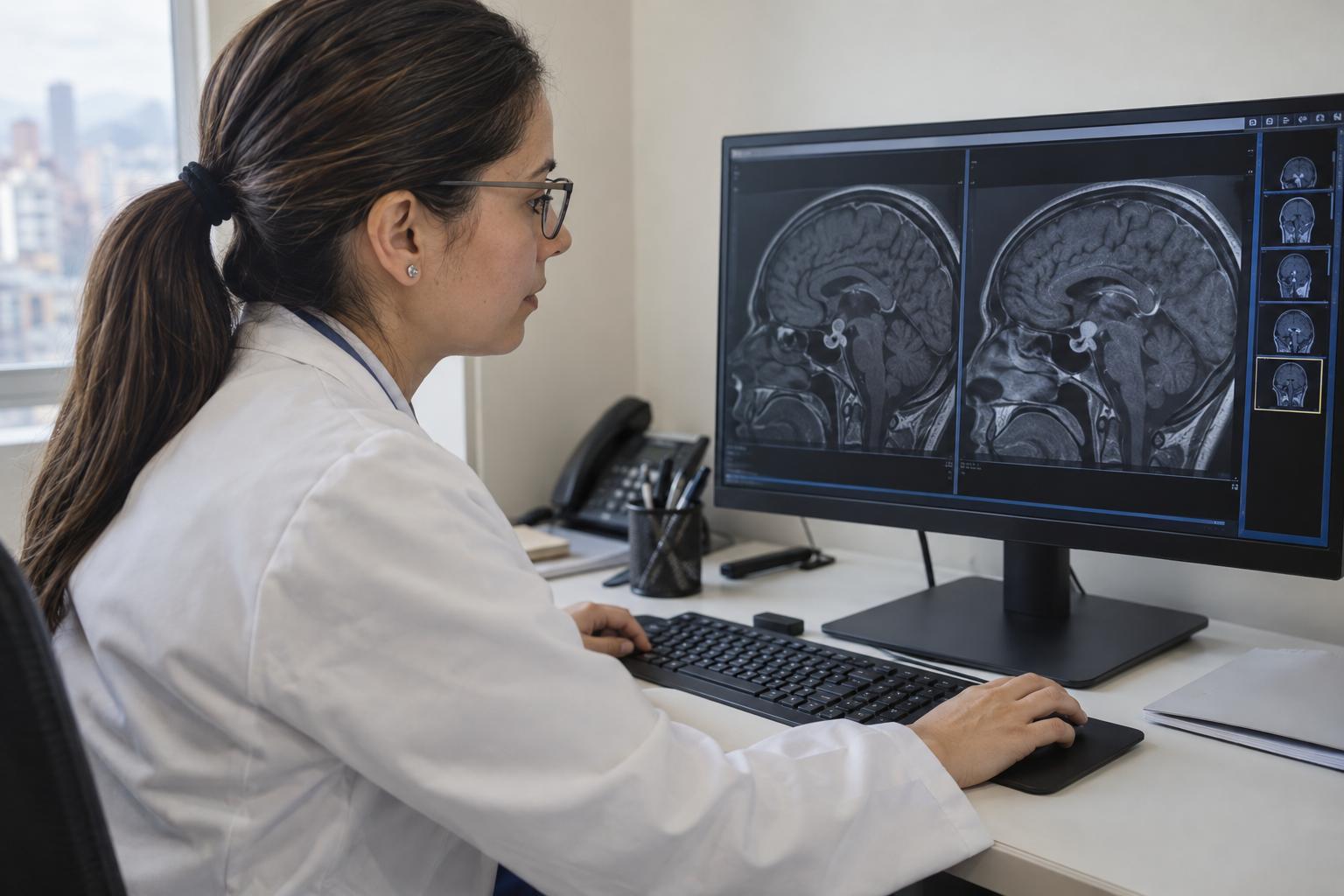
5 min de lectura
Publicado: 11 de noviembre de 2026 · Actualizado: 11 de noviembre de 2026
Not Every Pituitary Lesion Needs Immediate Treatment: When Monitoring May Be Considered
Learn which factors your care team may consider when deciding whether a pituitary lesion needs immediate treatment or planned follow-up.

5 min de lectura
Publicado: 25 de octubre de 2026 · Actualizado: 25 de octubre de 2026
Is It the Pituitary or Something Else? Factors That Can Resemble Hormonal Symptoms
Fatigue and changes in sleep and appetite can have many explanations and do not, by themselves, identify a pituitary problem. Learn what information to track and when to seek medical evaluation.

6 min de lectura
Publicado: 24 de octubre de 2026 · Actualizado: 24 de octubre de 2026
From Consultation to Imaging: How a Pituitary Evaluation Is Organized
Learn how a possible pituitary disorder is evaluated and why the medical history, hormone tests, and imaging are recommended based on each person’s findings.

6 min de lectura
Publicado: 23 de octubre de 2026 · Actualizado: 23 de octubre de 2026
Why the Pituitary Gland Can Be Affected: Predisposition, Triggers, and Confirmed Causes
Learn the difference between predisposition, possible associated factors, and medical causes of a pituitary disorder, and why its evaluation depends on the hormone affected.